

Kris och jag är stora fans av trädgårdsarbete. Vi odlar våra egna blommor, örter, frukt, bär och grönsaker. Vi kan inte tillhandahålla alla av våra behov, men vi gör vad vi kan. Under de senaste två åren har jag hävdat att detta är ett utmärkt sätt att spara pengar om du har tid och utrymme. Men är det verkligen?
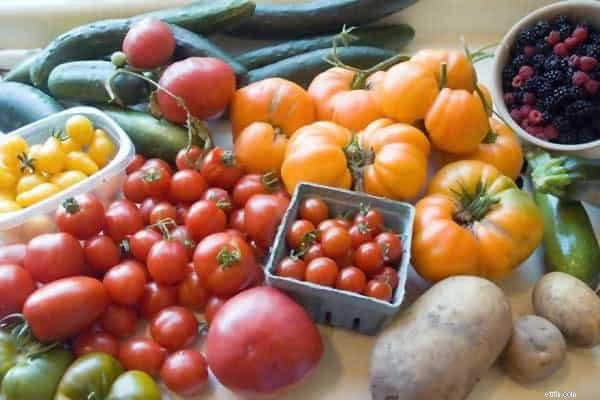
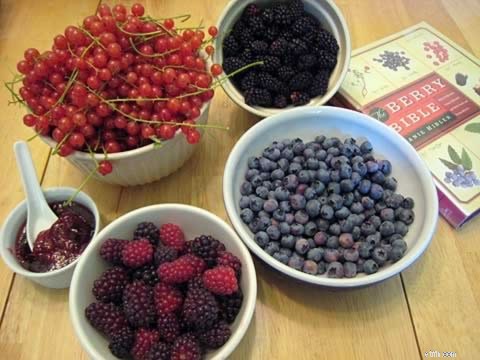
En riktig helgskörd från augusti 2006.
Under nästa år planerar Kris och jag att spåra allt vårt arbete och utgifter på gården. Jag tänker inte tabulera upp hur lång tid det tar att trimma lagraren eller buxbomen, men jag kommer att spåra följande:
Till exempel, när Kris lägger sin fröbeställning under nästa vecka eller två, kommer jag att notera hur mycket hon spenderar för ett paket tomatfrön. Jag kommer att hålla reda på hur mycket hon använder sina odlingslampor (med hjälp av min praktiska Kill-a-Watt elanvändningsmonitor), hur mycket vatten och gödsel vi förbrukar, hur många tomater vi skördar och hur mycket det skulle ha kostat oss i butiken.
Jag kommer att sammanställa en hel del data.
Den sista lördagen i varje månad hoppas jag kunna ge en uppdatering av våra framsteg. I slutet av året kommer vi att se våra besparingar och hur mycket det kostar oss att spara dem. Det här kommer inte att vara ett exakt experiment - det finns för många variabler inblandade. Men våra resultat borde kunna berätta för oss hur värdefull vår trädgårdshobby är.
Tidigare inlägg om trädgårdsskötsel inkluderar:
Vårt första steg? Bläddra i frökatalogerna för att bestämma vad vi vill odla i år!
Januari är alltid en långsam månad i trädgården, men den är också full av löften. Det är dags för årets första sysslor!
Tidigt i januari tillbringade Kris och jag femton minuter tillsammans på gården och satte om våra fruktträd. Vi har två äpplen, ett päron och en katrinplommon. De är benägna att växa lite snett, så varje vår ser vi till att de är ordentligt fastsatta på sina pålar. Det ser ut som att vi också borde göra detta varje höst. Kostnad:$0. Tid:0,5 arbetstimmar.
Förra helgen beskärade jag våra vindruvor och kanonbär. Det här är alltid lite läskigt - jag vet inte riktigt vad jag gör. Men när jag väl kommit igång kan jag fejka det. Med björnbären och hallonen är det uppenbart att fjolårets käppar är döda. Med druvorna fyller jag bara på det medan jag går, beskär vinrankorna tillbaka till tråden och lämnar ett par knoppar på varje sporre. Det här är ett roligt jobb för mig. Jag älskar att beskära. Kostnad:$0. Tid:0,75 arbetstimmar.
I mitten av månaden gjorde Kris en beställning på frön. Som vanligt utbytte hon idéer med ett par trädgårdskollegor och de slog ihop sina resurser. Ett paket frön innehåller mer än vi behöver, så det är trevligt att kunna dela kostnaden med vänner. Kris säger att hon inte kommer att plantera något förrän i mars, men jag vet att så fort vi får en solig dag eller två, kommer hon att längta efter att komma till jobbet. Här är en glimt av hennes kalkylblad:
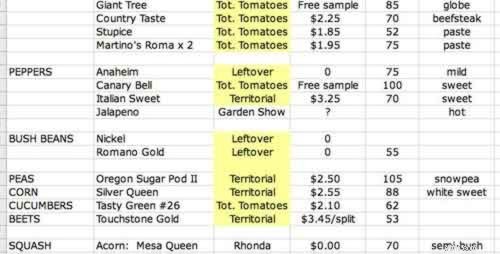
"Hur lång tid tog det för dig att beställa fröna?" Jag frågade Kris när jag började skriva den här artikeln.
"Jag vet inte," sa hon. "Kanske tre timmar."
"Tre timmar ?!?!?!" Jag blev förbluffad.
"Det är inte som att det är hårt arbete", sa hon. "Jag bara sitter där med katalogerna och drömmer." Det är min fru:drömmer om frön. För våra syften - och för att få ett fint runt nummer på slutet - kommer vi att säga att hon spenderade 2,75 timmar på att välja och beställa frön. Hennes kostnad var $27,30.
(Uppdatering: Vi använder Totally Tomatoes för den frukten och Territorial Seed för nästan allt annat.)
Januari var lugn. Vi tillbringade 4,0 timmar med att arbeta på våra frukt- och grönsaksträdgårdar och spenderade totalt 27,30 USD. Februari kommer att se mer action. Vi behöver gödsla vissa växter, förbereda vårt plantmaterial inomhus och beskära fruktträden. Det bästa av allt är att vi planterar ärtorna. Saker och ting kommer dock inte att bli riktigt tidskrävande förrän i mars. (Tja, det kommer att finnas massor av annat trädgårdsarbete – det kommer bara inte att vara matrelaterat.)
Som förra månaden finns det väldigt lite att göra i februari. Det var fortfarande ganska kallt i början av månaden, men på Alla hjärtans dag gav sig den dystra Oregon-vintern. Vi hade några underbara soliga dagar med temperaturer nära 15c (59f). Det här var ett tecken på att göra vårt första seriösa trädgårdsarbete.
Vi tillbringade cirka 15 timmar på gården i februari, mestadels av att skära ner våra 60+ rosenbuskar, beskära buxbom och plocka upp vinterskräp. Men vi hittade lite tid att arbeta på våra livsmedelsproducerande anläggningar också.
Först plockade vi upp eklöven som hade begravt våra jordgubbsplantor. Jordgubbarna får springa ut i rosenträdgården och skickar sina löpare fram och tillbaka. En vän gav oss 50 plantor gratis när vi flyttade in i det här huset 2004, och nu har vi för många att räkna. Vi gödslade bären i höstas.
Vi beskärade också våra fruktträd – plommonet, päronet och båda äpplena. Efteråt renade vi potatisfläcken och drog murgröna runt blåbären. För att avsluta helgen satte vi upp ärtspaljén och planterade 72 frön av Oregon Sugar Pod II. I juni kommer dessa att bli ett välsmakande mellanmål, och till mycket låg kostnad.
Förra veckan tog vi oss tid att testa pH i jorden runt våra blåbärsplantor. Blåbär gillar sur jord, så vi måste ge dem lite specialgödsel under nästa vecka eller så.
Trots många timmar på gården ägnades bara 2,5 av dem åt våra livsmedelsproducerande växter. Vi spenderade inga pengar på det här projektet i februari.
Hittills under 2008 har vi spenderat 27,30 USD och 6,5 timmar på att ta hand om våra frukt- och grönsaksträdgårdar. Mars kommer att se mer action. Vi behöver gödsla vissa växter, förbereda vårt inomhusplanteringsmaterial och planera grönsaksträdgården. Och vilken dag som helst nu kommer vi att se våra första ärtor sticka genom jorden:
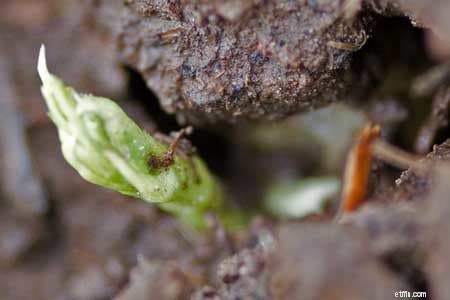
I mina tankar är mars fylld av trädgårdsaktiviteter. Inte så mycket, som det visar sig. Jag tror att april också kommer att bli ljus.
Även om vi inte gjorde det mycket i mars fick vi äntligen se viss verkan från växterna. Den 1 mars planterade Kris tomaterna och paprikan (och några blommor). Hon tillbringade 90 minuter med att så fröna i speciella biokupoler. ("Jag förespråkar normalt inte en produkt framför en annan", säger hon, "men jag verkligen som dessa.”)
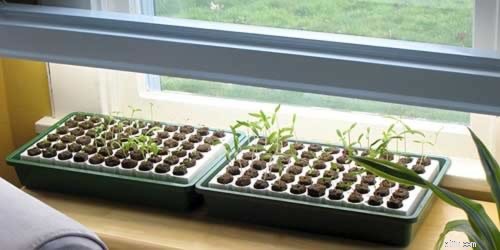
Efter att plantorna har fått en bra start hänger Kris upp sin odlingslampa.
Vi placerade två fröbrickor i vårt burspråk i söderläge. Efter att de grodde satte Kris upp en odlingslampa för att ge plantorna ännu mer energi. (Mars är inte direkt soligt i Oregon.) Den 24 mars transplanterade hon den starkaste plantan av varje sort i en 4-tums kruka.
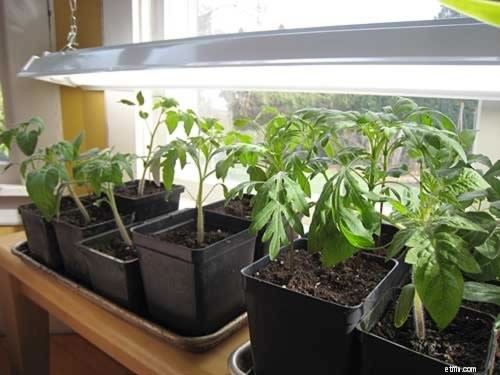
Kan du fatta att de har vuxit så mycket på bara tre veckor? Fantastiskt!
Den 15 mars gödslade vi jordgubbarna med Strawberries Alive. Helgen därpå krattade Kris löven från grönsaksträdgården (vi använder dem som täcke under vintern) och spatade ett område. Jag kommer att använda rototillern för att bearbeta jorden om ett par veckor.
Genom allt detta har mina ärtor växt långsamt. (De är så söta!)
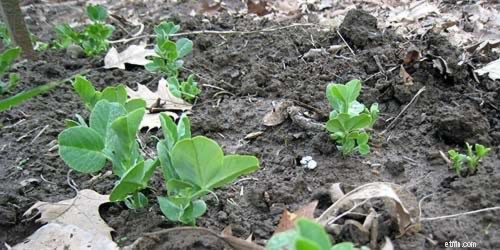
Jag är lite orolig för den fläckiga groningen, men jag är säker på att vi kommer att ha mycket.
Även denna månad köpte vi en fullt fungerande upprätt frys (samma formfaktor som ett kylskåp) för gratis från en av Kris medarbetare. Det här är en jackpott. Det ger oss mycket mer utrymme för matförvaring.
Under mars spenderade vi 113 USD på ekologiska skadedjursbekämpning och gödningsmedel för våra frukt- och grönsaksgrödor. Vi spenderade också $16 för att köpa krukjord och en blötläggningsslang. Jag använde min Kill-a-Watt för att mäta strömförbrukningen för odlingslampan, men den använder bara några ören el per dag. Låt oss kalla det en slant för hela månaden, vilket ger våra utgifter till 130 USD i mars.
"Det var den bästa av tider, det var den värsta av tider..." - Charles Dickens, A Tale of Two Cities
April såg äntligen lite action på gården, men inte den sorten vi hade hoppats på.
Större delen av månaden var lugn. Våra grönsaksstarter fortsatte att frodas under growlights. I slutet av månaden hade tomaterna transplanterats till gallonstora krukor och var över två fot höga! Kris kliade efter att få ner dem i marken.
Den genomsnittliga senaste frosten är ungefär den 15 april, men speciellt i år har det varit konstigt, med snö i Portland-området i mitten av april. Kris kollade väderprognosen för nattetid och beslutade att det var värt risken. Att hålla växterna inomhus längre var också en risk; kvar inuti, skulle de växa spinkigt när de sträckte sig för riktigt ljus.
Kris var ledig i måndags och vädret var soligt och varmt; hon kunde inte motstå. Hon tillbringade två timmar med att plantera sina tomater ute i grönsaksträdgården. Hon grävde ett djupt hål för varje, blandade i lite gödsel, klappade försiktigt in plantorna och placerade tomatburarna runt dem.
I tisdags tog det en vändning till det sämre. När jag skulle iväg för att köra till min presentation vid Western Oregon University började det hagla. Haglet var inte stort, men det föll kraftigt i tio eller femton minuter. En hård, kall vind slog ner i trädgården. "Jaha" tänkte jag. "Kris tomater har problem." För att göra saken värre kom Kris hem sjuk med en otäck huvudförkylning som höll henne i sängen resten av tisdagen och hela onsdagen. Hennes försvarslösa växter lämnades åt elementen.
Visst nog - plantorna har strimlats. De flesta grenarna är trasiga och hänger på marken. Sniglarna, som känner sin svaghet, har flyttat in för att avsluta jobbet. Kris hyser fortfarande hopp om att några dagars sol (som vi kommer att få) kommer att hjälpa växterna att klara sig, men sanningen är att vi kanske måste betala kontant för att köpa nystarter. Och om vi gör det, kommer de inte att vara de arvegodsvarianter som hon har ammat från plantor. (Kris anteckning: Jag leker barnskötare i en eller två veckor innan jag bestämmer mig för vad jag ska göra. Idag har jag sprayat de sjuka tomaterna med bladgödsel för att se om det hjälper till att återuppliva dem. Nio av de tio plantorna har fortfarande sina växtspetsar i ganska gott skick, men alla sidogrenar är trista. Ve mig! )
Under tiden har sniglarna slukt hennes gurkplantor också. Kris är inte glad. (I själva verket kan upprörd vara ett bättre ord.) Paprikan och ekollonsquashen ser okej ut, och rödbetorna gror fint. Potatisen vi startade från slutet av förra årets skörd mår bra. Ironiskt nog ser de flesta av blomtransplantationerna ut som om de klarade hagel och vind bra. Ändå är tomater hårda saker, till en viss grad, så de kanske bara klarar det trots allt.
Det som började som en utmärkt månad för Get Rich Slowly Garden Project slutade i en relativ katastrof. Ändå är det tidigt nog att göra en investering i plantor för plantskolor, om det behövs, för att få en produktiv skörd senare.
Förutom bakslaget med grönsaksträdgården spenderade vi lite mer tid på gården under april för att förbereda våra livsmedelsproducerande växter för sommaren. Jag tillbringade en halvtimme med att hänga skadedjursfällor på fruktträden, och Kris och jag kombinerade en timmes arbete med att binda upp bärkäpparna. (Hallonen och björnbären har förresten blivit berserka. De älskar den måttligt varma, mycket blött väder vi har haft. Wow.)
Vi gjorde några små inköp under månaden. Vi spenderade $25,98 för en ny slang, samt $2,53 på ett par örtfröpaket. (Vi spenderade 21,50 USD på den årliga växtmässan igår, men det är en kostnad för maj. Om du hoppas kunna odla en trädgård i år är det nu dags att kolla efter växtförsäljning i ditt område. De är ett utmärkt sätt att hitta grönsaksstarter av hög kvalitet och expertråd.)
Dessutom har våra jordgubbsplantor börjat blomma. Vissa av dem är enorma. Om bara en månad kommer vi att skörda våra första produkter!
Under april spenderade vi 28,51 USD på trädgårdsrelaterade utgifter. Vi tillbringade 5-1/2 timme med att arbeta på våra grödor.
Vi har mycket trädgårdsarbete framför oss de närmaste veckorna, inklusive mycket som är matrelaterat. Jag har lärt mig att jag inte beskärade mina druvor ordentligt, så jag måste upprepa den uppgiften. Jag behöver plantera min majs (möjligen i eftermiddag). Vi kan behöva byta ut tomaterna. Och med tur kommer vi att skörda våra första jordgubbar innan slutet av maj!
Idag plockade jag de två första jordgubbarna från vår trädgård. De var inte särskilt goda jordgubbar - det har regnat mycket Oregon på sistone, och de var ganska smaklösa - men de var jordgubbar, sommarens förebud. De betyder starten på fem månaders matskörd från vår gård.
Som ni kommer ihåg från förra månadens uppdatering slutade april med en smäll. En hagelstorm från sen säsong skadade Kris tomater. Vi var oroliga att de alla kan ha förstörts, men i slutändan behövde bara två ersättas.
Under den första helgen i maj besökte vi Oregon Master Gardeners växtförsäljning. Även om Kris startar de flesta av sina grönsaker från frö, kan hon inte motstå en chans att vandra i stånden och titta på andra alternativ. I år spenderade hon 21,50 USD på jalapeños, zucchini, basilika, oregano och timjan.
Vi har även lagt två trädgårdsrelaterade beställningar online denna månad. Vi spenderade $23,59 på Park Seed på förnödenheter för nästa år. (Vi räknar detta som en kostnad för 2008 för att kompensera för det material vi köpte 2007 men använde i år.)
Vi gjorde också en beställning på $65,80 med Spray-N-Grow för att köpa en mängd olika gödselmedel, samt en produkt som heter Sluggo. Tyvärr fungerar Sluggo inte särskilt bra än så länge.
I Oregon är sniglar en olägenhet. (De är vårt inofficiella statsdjur!) Vi kan inte använda de ständigt populära ölfällorna eftersom regnet gör dem ineffektiva. Vår trädgård är för stor för att använda koppartejp - det verkar inte göra så mycket nytta. Inget ekologiskt verkar heller fungera när det regnar varje dag. Sniglarna har hackat Kris gurkor så fort hon kan plantera dem. Min majs börjar gro, men de slemmiga bestarna slickar sina kotletter över det också. (Och då majsen måste ta sig förbi blåskrikan.)
Kris och jag spenderade båda tid i grönsaksträdgården den här månaden, men inte så mycket som jag hade förväntat mig. Hon tillbringade ungefär fyra timmar med att plantera saker och applicera en bladgödsel. Jag tillbringade en timme med att spata jorden (ingen rototiller för mig i år) för att förbereda den för majs, varefter jag planterade själva fröna. Jag ägnade också en halvtimme åt att rensa druvorna. Tillsammans ägnade vi bara 5-1/2 timme åt att arbeta med frukt och grönsaker i maj. (Kris säger att hon skulle ha spenderat mer tid om det inte hade regnat så mycket!)
Jag förväntar mig hela tiden att den tid vi lägger på det här projektet kommer att explodera, men det har den inte gjort det hittills. Vänta bara tills blåbärssäsongen kommer. Det tar en evighet att välja dessa saker...
Sally Herigstad på MSN Money lyfte fram vårt trädgårdsprojekt i sin senaste artikel med fem livsmedel som det är billigare att odla. Maten? Fruktträd, sallad, örter, vingrönsaker och paprika. Hon listar också fem att överlåta till experter:potatis, morötter, selleri, sparris och vete. Tack för att du pekade på vårt projekt, Sally!
Medan Kris och jag kanske inte lägger ner mycket arbete på trädgården än, har växterna flyttat sina ansträngningar till överväxling. De älskade den varma, blöta Oregon May. Bären bär, fruktträden bär frukt och grönsakerna växer som gangbusters.
Förra veckan tog Kris kameran ut för att fotografera några av sina favoritväxter. Först ut är en av tomaterna:
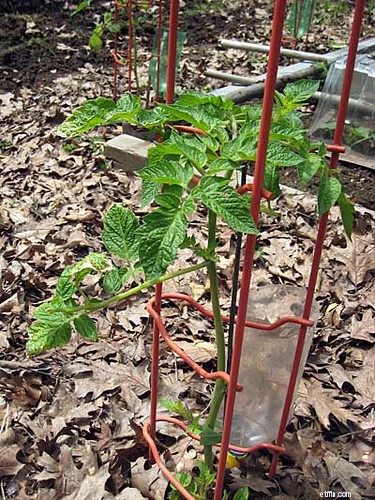
"Den här bilden är sorglig," sa Kris till mig. "Titta på hur växten fortfarande saknar de flesta av sina nedre blad!" Jag skulle vilja påpeka tomattillbehören:den robusta tomatburen och tvålitersflaskan bredvid den (för vattning under sommaren). I bakgrunden kan du se en ekollon squash under en plastklocka.
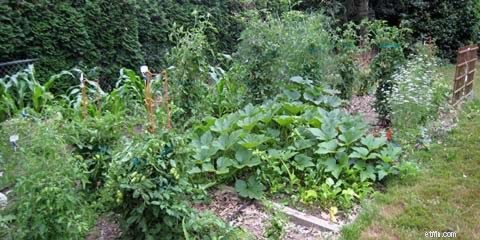
Det andra fotot visar mina älskade caneberries:björnbär, hallon och marionbär. Det här ser förmodligen ut som en vägg av grönt för dig; så ser det ut personligen också.
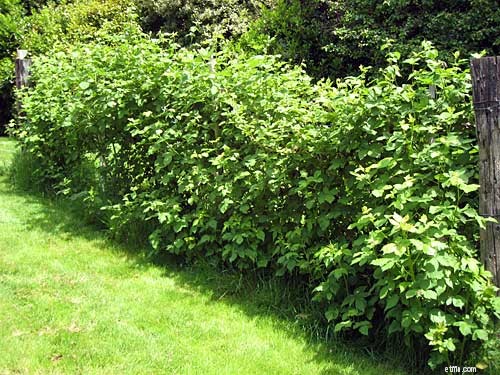
Om du kunde se genom den gröna väggen, skulle du spionera en 20-fots rad med druvor. Runt hörnet har vi fyra fruktträd:två äpplen, ett päron och en katrinplommon. Det här ser ut som det första året vi kommer att få en ansenlig fruktskörd.
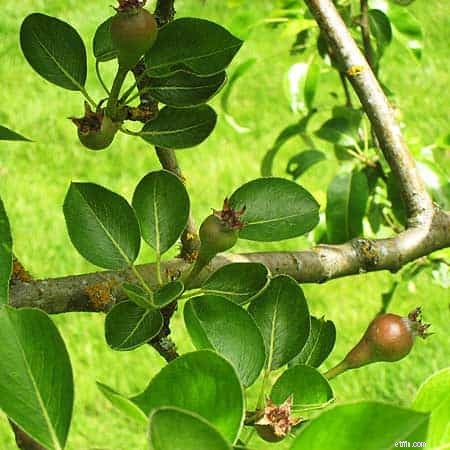
Slutligen, här är ett foto på Kris stolthet och glädje, hennes röda vinbärsbuske. Bären är gröna nu såklart. Det är okej. Vi kan vänta.
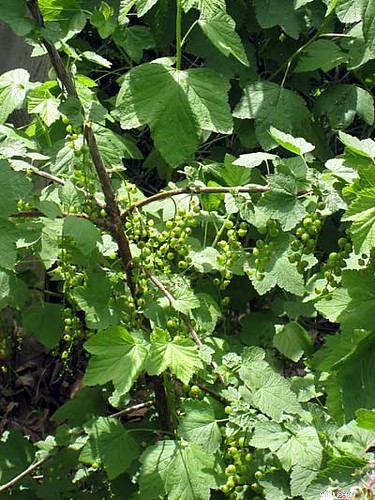
Det finns många andra växter vi skulle kunna visa dig:örterna, potatisen, ärtorna. Nåväl – kanske nästa månad.
Under maj spenderade vi 110,89 USD på trädgårdsrelaterade utgifter. Vi tillbringade 5-1/2 timme med att arbeta på våra grödor.
"Jag vet inte," sa jag efter att ha tabellerat siffrorna i kväll. "Vi har redan spenderat 300 USD på trädgården - det kommer inte att löna sig."
"Men det mesta av den monetära kostnaden är klar nu," sa Kris. "Allt som återstår är att ta hand om växterna. Från och med nu handlar allt om skörden. Jag tror att du kommer att bli förvånad."
Jag hoppas det. Hittills har vi spenderat 21 timmar och $296,70 på vår trädgård, och allt vi har att visa för det är två vattniga jordgubbar!
Det var en eländig juni för trädgårdsmästare i nordvästra Oregon. De första två veckorna var inte bara blöta - vi är vana vid det - de var också kalla. De lokala medierna kallade månaden "juni-uary". Invånarna var snabba med att anamma termen. Det svala vädret trängde tillbaka ett antal grödor. Jordgubbsbönder ripade. Blåbär och hallon är tre veckor försenade.
Men nu har solen kommit. Vi har skördat jordgubbar och ärtor hela månaden, och jag plockade det första blåbäret i morse. (Inte särskilt bra - det var inte riktigt moget.) Hallon borde vara på om någon vecka, tror jag, och av de rikliga blommorna att döma kommer vi att få en rejäl skörd. Under tiden har päron-, plommon- och äppelträden satt massor av frukt. I slutet av juli kanske vi till och med har några grönsaker.
Kort sagt, även om månaden började långsamt borde vi rulla in produkter inom kort.
Våra trädgårdssysslor har blivit mer rutinmässiga. Nu när alla grödor har planterats är allt vi gör:
Mellan oss tillbringade Kris och jag ungefär sju timmar denna månad på att utföra dessa uppgifter. Jag ska erkänna att Kris är ogräsrensaren och gödselmedlet. Vi skördar båda, vilket är en syssla som jag trivs med. Det är något zen-likt med att röra sig bland jordgubbarna. (Och bara vänta tills jag plockar blåbär – jag tycker att det är väldigt meditativt.)
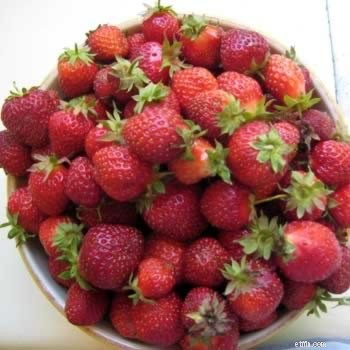
Vi skördade våra första jordgubbar den 31 maj, även om vi räknar dem i junis totalsummor. (På samma sätt skördade vi våra första vinbär idag, men kommer att räkna dem för juli.) Under de senaste veckorna har vår skörd bestått av:
Det här kommer att verka som en gåva för vissa av er, och som en liten penning för andra, men det är vad vår trädgård producerar. Det är vad vi har plats för. Jag tror faktiskt att båda skördarna minskade avsevärt i år på grund av vädret. Till och med ärtorna kämpade på. (Ätor kämpar vanligtvis inte i Portland.)
Snöärter i den lokala mataffären kostade 5,99 USD per pund under hela denna månad, så vår skörd var värd 14,08 USD. Jordgubbarna är svårare att prissätta. Köpt från Safeway i två- eller fyrapundsbehållare, kunde de fås för $2,50 per pund. Kris plockade tolv pund på en lokal gård för 85 cent per pund. Men jag kommer att använda livsmedelsbutikens pris på ett pund (3,99 USD) eftersom vår skörd kom i steg om ungefär ett pund. Det är ytterligare 46,84 $ i mat. (Jag välkomnar råd och debatt om denna metod, förresten - jag vet faktiskt inte det bästa sättet att jämföra priser.)
Totalt skördade vi 60,92 USD mat från vår trädgård den här månaden.
Under juni spenderade vi 79 cent på trädgården (för ett paket salladsfrö på Winco). Vi tillbringade sju timmar med att arbeta på våra grödor.
Förra månaden skrev jag att jag tvivlade på att vi skulle kunna få tillbaka våra utgifter för trädgården. Den här månaden, efter bara små skördar av ärtor och jordgubbar, verkar det som om det inte råder någon tvekan om att trädgården kommer att spara oss pengar. Jag slår vad om att vi skördar 300 USD bara i tomater!
Efter sex månader är vi $236,57 i hålet på det här projektet.
Tidigare nämnde jag att Kris plockade 12 kilo jordgubbar på en lokal gård. U-Pick-produkter är en utmärkt affär om du inte har en egen trädgård. En familjeresa för att plocka bär kan vara en utmärkt utflykt för barn, och det kan ge några läckra sylter och siraper.
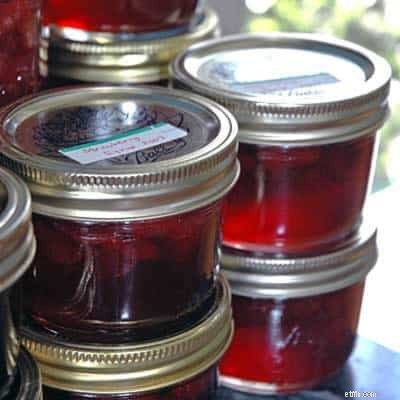
Det var en bär, bär bra månad på Rosings Park (som vi kallar vår glada halva acre). Den dystra juni försvann i minnet, solen kom fram och bären mognade. Det här är den tiden på året då det finns lite att göra i trädgården än att vattna växterna och skörda produkterna. Det finns mycket arbete att bevara maten däremot:konservering, frysning och torkning.
I början av juli upptäckte vi att vi inte hade några hallon. Vi brukar få flera kilo från våra överivriga käppar, men i år fick vi bara några småbitar – de var inte ens värda att väga.
Vi är fortfarande inte säkra på vad som gick fel, men den mest troliga orsaken till vår hallonkatastrof är dålig beskärning från min sida. Vår gissning är att jag antingen beskär käpparna för hårt, eller, mer troligt, beskär dem för sent. Vi förväntar oss att se en höstskörd (och förmodligen en bra sådan), men vår sommarskörd av hallon blev aldrig av.
Detta projekt är intressant eftersom det har tvingat oss att bestämma hur vi ska klassificera vissa kostnader och "vinster". Till exempel odlar vi faktiskt inte körsbär på vår egendom, men grannarna låter oss skörda 12,5 pund (5,649 kg) frukt. Ska vi räkna det i våra summor? Till cirka 2,99 USD/pund, det är 37,38 USD av körsbär!
Vi har istället bestämt oss för att hålla en separat sammanställning för produkter som tagits emot genom andra metoder. Det finns säkert en kostnadsbesparing inblandad, men vi har faktiskt inte odlat det själva.
Samtidigt har vi hittat ett sätt att hantera våra överflödiga bär samtidigt som vi kompenserar för vår oförmåga att odla morötter och sallad. Vi byter bär mot grönt som odlats av en av Kris medarbetare. Detta är mycket för båda parter. För redovisningsändamål ignorerar vi dock denna affär. Efter att vi skördat bären och vägt dem spelar det ingen roll vad som händer efter det.
Här är hela sammanställningen för månadens trädgårdsproduktion.
I det här projektets syften använder vi prissättningen "bästa matchning". Baserat på GRS-läsarförslag får vi typiska priser från vår lokala lantbruksmarknad. I vissa fall använder vi prissättning från en lokal ekologisk produktstånd. I alla fall försöker vi vara rättvisa, men det här är mer konst än vetenskap.
Vår totala skörd i juli gav 123,68 USD i produktion, inklusive 31 pints bär.
Den här månaden tillbringade Kris ungefär en timme varje helg med att gödsla och hålla koll på trädgården. Tillsammans tillbringade vi en timme den här månaden med att binda ihop tomaterna, sprida kompost och andra sysslor. Men det mesta av vår tid gick åt till att plocka bär. Vi kombinerade i ungefär sex timmar och skördade våra produkter. Vi tillbringade totalt elva timmar med att arbeta på våra grödor den här månaden.
Under juli spenderade vi 20,94 USD i trädgården för tre påsar med jord för att gå runt blåbärens rötter. (Blåbärens baser är hopfällda och jorden tenderar att erodera, vilket exponerar rötterna.)
När juli går mot sitt slut har tomatplantorna nått toppen av sina burar och är laddade med grön frukt. Sungold körsbärstomaten kommer att mogna först (vi har knaprat några redan), följt av Stupice. Gurkan och zucchinin börjar producera regelbundet och majsen frodas. I örtbädden blir fläderbären mörka och glänsande, och de närliggande fruktträden bär varsin belastning som vi kommer att njuta av sent på sommaren.
Kris har lagt undan snöärtor och riven zucchini i frysen, tillsammans med flera omgångar fryssylt (min favorit). Hon har också lagt upp flera varianter av kokt sylt och gelé, körsbär på burk i lätt sirap, inlagda gröna bönor med dill, vitlök och ingefära och har torkade körsbär, blåbär och vinbär för framtida bruk. (En av hennes medarbetare kom över på onsdagen för att lära sig att burka inlagda bönor.) Vi kommer att vara glada över att ha sommarens belöning under den långa regniga vintern.
Bärskörden fortsatte denna månad i Rosings Park, vår glada halva tunnland söder om Portland. Blackberry-tid är min favorittid på året. Och även om augusti ofta är för varm för mig, är jag villig att lida av värmen eftersom jag vet att det innebär början på konserveringssäsongen. Visst har Kris satt upp salsa och äppelmos och alla möjliga sorters pickles och sylt. Mums.
Till Kris glädje skördade vi äntligen tomater den här veckan, en hel månad efter schemat .
Här är en av trädgårdsarbetets sorgliga hemligheter:midsommar kan vara frustrerande. Om du inte håller dig uppdaterad kan trädgården komma ifrån dig. Här är ett faktiskt citat från Kris mitt i månaden. Vi låg i soffan och tittade på olympisk dykning när jag transkriberade följande klagan:
Jag plockade inte blåbären. Bönorna måste plockas så att de fortsätter att producera. Gurkorna kommer på. Jag behöver vattna saker för det kommer att bli varmt den här veckan. Jag måste få över vår extra zucchini till grannarna. Jag valde inte ens Patrices äpplen. Hon erbjöd mig tre gånger, men jag har varit för upptagen och nu är de klara.
Kom ihåg:vi har en blygsam trädgård. Vi odlar mat för skojs skull. Detta projekt kommer att avgöra om det också finns en kostnadsfördel. Men även en blygsam trädgård kan producera mycket av mat. Med min mamma på sjukhuset och Kris föräldrar i stan hade vi inte mycket trädgårdstid under de första två veckorna i augusti. Ett tag var det risk för att vi skulle tappa kontrollen, men vi lyckades hålla ut!
Vi spenderade ingenting på trädgården den här månaden förutom vår tid. Mellan oss tillbringade vi cirka åtta timmar med att plocka bär och grönsaker. (Kris gjorde också lite gödning i början av månaden.)
Vi kompletterade dock vår skörd på ett antal sätt:
Vi kommer att fortsätta att byta produkter med andra människor, ge bort vårt överskott och njuta av andra trädgårdar. Om ungefär en månad kommer jag att kunna skörda Concord-druvor från grannen tvärs över gatan. Juicen från dessa är fantastisk.
Här är hela sammanställningen för månadens trädgårdsproduktion.
Our total harvest in August yielded $123.94 in produce, mostly from berries and tomatoes. Note that for grins and giggles, we’re tracking the yield (in pounds) of each tomato plant. I’ve been dying to know how much a single tomato plant can produce in a year.
Obs! For the purposes of this project, we’re using “best match” pricing. Based on GRS reader suggestions, we’re obtaining typical pricing from our local farmers market. In some cases, we use pricing from a local organic produce stand. In all cases, we’re trying to be fair, but this is more art than science.
We spent no money on the garden this month! We’re now within $20 of our expenses for the year. By the middle of this week, we’ll be clearing “profit”. We’ll be able to begin computing how much our labor is valued at. (Though we do this because we love it, not just to save money.)
This month, we didn’t keep track of the apples and cherries and other produce we obtained through other methods than our own garden.
As the summer wends its course, food production will remain high, especially among tomatoes. We’ll also begin harvesting fruit before long:pears, plums, grapes, and apples. As usual, we won’t have copious amounts of any of these (except tomatoes), but just enough to relish the pleasures of gardening.
September generally brings the largest harvests for our garden. That was true again this year, but not by as much as we hoped. The bad weather at the beginning of the season means that things just aren’t ripe yet. Kris has been encouraging her tomatoes for weeks. I’m dying for the grapes to be ready. (They’re almost there!)
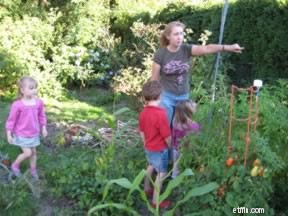
Kris gives orders to her garden elves. Photo by Lisa.
We did harvest a lot last month, the bulk of which was tomatoes and tree fruit. We had so many tomatoes, in fact, that Kris was able to enlist the help of five-year-olds Albert and Annika to help harvest. They did an amazing job picking cherry tomatoes.
September’s nice because there’s almost no garden maintenance. All we have to do is stroll out to pick the food we want. During the middle of the month, Kris and I had a mild misunderstanding. I thought she told me to go pick all of the apples from our trees, but she really told me to pick a few for some jam. I came back into the house with 19 pounds of apples, which was far more than she needed. We made a spontaneous batch of applesauce.
Actually, Kris did a lot of canning this month:marinara sauce, applesauce, salsa, pickled plums, and more. As usual, we supplemented our own harvest with free food from friends and neighbors (25 pound of pears here, 15 pounds of plums there), as well as things like onions and garlic from the produce stand.
Now, as the rains begin and the harvest draws to a close, our pantry and freezer are both packed full. When we make a blackberry cobbler in February, take pickled “dilly beans” to a potluck or pop open a jar of spicy salsa on a chilly afternoon, we’ll be extending the benefits of our garden year-round. Our home-canned goods will help defray food costs over the next eight months until we can expect another strawberry crop to kick off 2009’s garden bounty.
Our total harvest in September yielded $152.75 in produce, largely from tomatoes. Here’s the complete tally for this month’s garden production.
Obs! For the purposes of this project, we’re using “best match” pricing. Based on GRS reader suggestions, we’re obtaining typical pricing from our local farmers market. In some cases, we use pricing from a local organic produce stand. In all cases, we’re trying to be fair, but this is more art than science.
I’ll be honest. I’m a little disappointed. Once it became clear that this garden was going to “make money”, I wanted it to kick ass. It hasn’t done that. Don’t get me wrong — we love having fresh produce outside our front door, and we enjoy the work with the plants, but I was hoping for more.
I think there are a few ways we can improve.
This year, we initially made a large financial outlay for two types of organic pest traps for the apple trees. They proved successful; our apples were practically worm-free! As the two trees mature and bear larger crops, the number and value of the apples will increase as the cost of the traps will drop (because some parts are reusable from year-to-year).
I almost want to repeat this entire project next year to see if we can spend less and harvest more! (Maybe we’ll do it behind the scenes, providing totals at the end of the summer.)
We spent nothing on the garden this month, and very little time. It doesn’t take long to harvest 19 pounds of apples or five pounds of tomatoes. September is the closest our garden will ever come to “pure profit”.
There is still food left to harvest. Though the rains have set in, we may have more tomatoes. (There are plenty on the plants, but the cool weather is likely to prevent them from ripening.) There are potatoes left to dig, and the acorn squash is ready to pick and dry for winter storage (to be tallied in October).
Most importantly, we have grapes to pick. We only have 20 feet of young grape vines, so we won’t have many from our yard. But the neighbor has vast swaths of Concords growing wild. I wanted to pick them last weekend, but he insisted they were two weeks away. I plan to pick them next Saturday. I just hope these rains don’t ruin the flavor. (Will rain do that to grapes?) There are few things I love more than fresh Concord grapes. (Especially fresh free Concord grapes.) They make amazing grape juice and Kris wants to put up some grape jelly.
Kris has made notes on her garden plan to help her organize her seed order for next year. Only a few short months until the seed catalogs arrive! And she has begun an experiment to grow a few herbs indoors this winter. Stay tuned on whether that is worthwhile.
October can be something of a relief for gardeners. The bulk of the harvest is finished, and all that remains is to pick the last straggling fruits and vegetables, and to begin cleaning up. While it’s sad that the harvest is winding to a close, it’s comforting to know there’ll be a respite from the work for several months. Plus it’s a chance to start dreaming about next year , all of the changes and improvements to be made.
And, believe it or not, the success of next summer’s garden begins today.
Last weekend, Kris and I received an unexpected windfall of sorts. John, our neighbor across the street, hooked us up with some free shit:He brought us a trailer-load of horse manure.
We had been planning to use some sort of soil amendment in the garden next spring, but hadn’t yet worked out the cost or the kind. John knows somebody who boards horses, and when she sweeps their stalls, she’s left with piles of hay and sawdust — and horse manure. Apparently she has so much of this stuff that she’s just giving it away. (We offered to pay John for his trouble, but he refused. We’ll bake him some home-made bread instead.)
On Sunday morning, John wheeled in a trailer containing about three cubic yards of this stuff, so Kris and I spent an hour spreading it over the vegetable garden. We’re happy to have finished this task already, especially in such a frugal fashion.
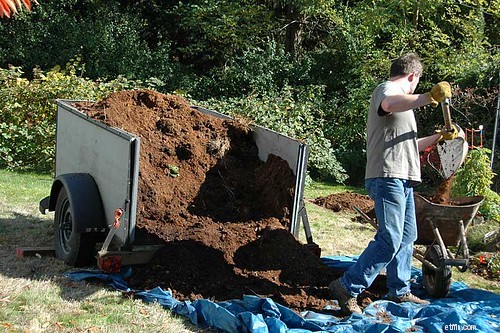
I shoveled while Kris wheeled and spread.
“How big is your garden?” e-mailed one reader during the middle of the month.
“I don’t know,” I said. “But I can find out.” I went outside with a tape measure to discover:
Not counting the fruit trees, that’s a total of 878 square feet (81.61 sq. m.) devoted to gardening. Those of you in the country might think this garden is small; those on city lots (or in apartments) might think it’s huge. For us, it’s just right.
Our total harvest in October yielded $130.77 in produce, most of which was tomatoes and grapes. (Our grape vines are just beginning to mature. The yield from the plants should increase markedly in the future.) Here’s the complete tally for this month’s garden production:
Note that this does not include the 40+ pounds of Concord grapes we picked from one neighbor, nor the 5+ pounds of high-bush cranberries we picked from another.
I should also mention that we had pretty much given up on the corn. The poor weather in the spring stunted its start, and then it was battered by a summer storm. Plus we didn’t plant a lot of it. Ultimately, however, we were able to harvest almost 20 ears total (between September and October), which isn’t a lot, but the stuff was good . Instead of giving up, we think we might actually try to grow more of it next year.
Obs! For the purposes of this project, we’re using “best match” pricing. Based on GRS reader suggestions, we’re obtaining typical pricing from our local farmers market. In some cases, we use pricing from a local organic produce stand. In all cases, we’re trying to be fair, but this is more art than science.
We spent a little more time in the garden this month, but again had no monetary expenses. The numbers for this month’s harvest also include $25 for the fresh herbs that we’ve harvested throughout the year (chives, basil, cilantro, sage, thyme, bay leaves, marjoram, oregano).
All that’s left now, really, is to perform garden clean-up. We’ll probably have several hours into the garden in November, but I doubt we’ll have much time in December at all. That’ll give me a chance to write a summary of the lessons we’ve learned, and to provide some tips for others who would like to try this!
Though we’ll spend more time in the garden this year, we’re unlikely to spend more money, and we’re unlikely to harvest anything else. We’re fairly certain that the numbers above are close to the final numbers for the year. We’ve spent $318.43 on our food and harvested $606.97 worth of produce. Roughly, we doubled our financial investment in this project.
Kris has already started one project for next year:She’s begun to grow herbs from seed to have a winter indoor garden (with grow light). The basil, cilantro, dwarf dill, thyme and oregano are off to a good start. Herbs are some of the most cost-effective plants to grow in a home garden. Even if you have limited space, a window-box herb garden can be an easy and economical way to dabble in the hobby.
This month’s garden update is small. As winter approaches, there’s less for us to do, and all that we harvest are herbs (and those only occasionally). Our major garden task this month was raking leaves. For most people, this is simply yardwork, but for us it’s a chance to work on the vegetable garden.
Last year, we bought a used chipper-shredder. We use it to grind up the many twigs and branches that fall on our property, but in mid-November, we also use it to shred the fallen leaves. With just a few hours work, we were able to create a thick layer of mulch for the vegetable garden, which we placed atop the horse manure our neighbor gave us last month. In late April, I will till all of this stuff into the earth just before we plant.
Speaking of next year, Kris and I have decided that we will do this project again in 2009 , continuing to provide monthly updates. We enjoyed it more than we had expected, and believe a second year of data would be instructive.
But I’m getting ahead of myself. First, here are the final totals for our garden harvest this year.
Berries ($225.74)
We don’t have a lot of berry plants, but those that we do have are good producers. They’re low maintenance and provide a lot of fruit for the space they occupy. I’m actually tempted to remove the 25-year-old blueberries to replace them with younger plants of a different variety.
Vegetables ($294.59)
Our vegetable crop was stunted this year by the lousy weather in Oregon’s Willamette Valley. We’re not the only ones who suffered. Nearly every gardener we know moaned about the poor yields, especially with tomatoes and peppers.
Fruits ($66.63)
Our fruit trees are young. We planted them four years ago, and they’re only just beginning to produce substantial crops. This was also the first year that the grapes produced a harvest. I’m tempted to pull out some of the grape vines to replace them with Concords, which I love. But as long as our neighbor across the street will let us pick his fruit, I don’t need to do this.
We also harvested at least $25 worth from our herb garden during the year.
And so we come to winter, that time of year when gardeners sit forlorn, gazing at the cold, frozen ground. Only the lingonberries remain to harvest. This year, Kris has started herbs from seed indoors, which gives her some sense of gardening. She’s talking about adding an Asian Pear tree to our small orchard. But mostly, now is a time to leaf through seed catalogs and think about the crops we’d like to grow next summer. Our dreams of August’s bounty pull us through the dark rainy days ahead.
2008 garden summary:
Month Time Cost Harvest January4.0 hours$27.30—February2.5 hours——March3.5 hours$130.00—April5.5 hours$28.51—May5.5 hours$110.89—June7.0 hours$0.79$50.83July11.0 hours$20.94$123.68August8.0 hours—$123.94September2.0 hours—$152.75October5.0 hours—$155.77November6.0 hours——December———Totals 60.0 hours $318.43 $606.97Next year our costs will be lower, as one type of pest-trap for the apple trees can be reused.
Even with the other stuff going on in our lives, Kris and I found time to begin planning our summer garden this month. Soon the winter days will warm, teasing us with thoughts of working in the yard. But true gardening weather won’t arrive for about three months.
There may not be much gardening to do during the winter, but we still eat plenty of food we’ve grown ourselves. Last week, Kris made several fruit smoothies and a fantastic berry cobbler from blackberries she froze in August. (Just thinking about this cobbler again makes me drool!) We’ve also been consuming canned pasta sauce and salsa, cream of tomato soup, pickles and applesauce.
Meanwhile, we’ve also made use of the herb garden we’re growing indoors this winter. We have a container filled with basil, cilantro, dill, and oregano. This is an easy (and cheap!) way to add a touch of freshness to our cooking.
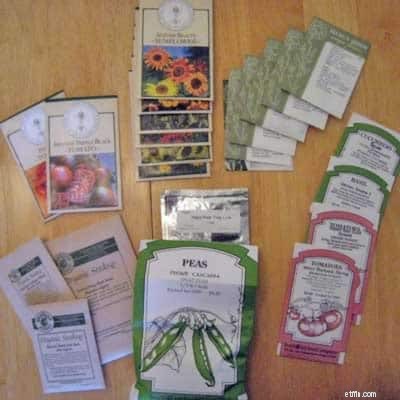
The real highlight of the month, of course, is placing the orders for seeds and supplies. Based on GRS reader suggestions, we’re trying Seed Savers Exchange for the first time this year, along with our other normal sources.
As in 2008, Kris created a spreadsheet to track her purchases (and the seeds she saved from last year). Our seeds have arrived, and now must wait patiently for the beginning of March. That’s when many of them will be started under our grow-lights.
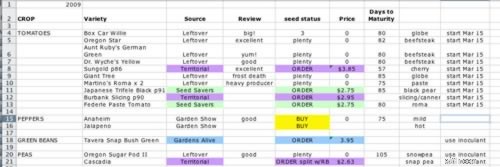
January was an expensive month for our garden. We spent $25.75 on vegetable seeds (and 25 strawberry starts). Kris spent $42 on flower seeds (which we do not track for this project). And, finally, we spent $105.40 for fruit trees and supplies (such as lures for pests).
After some debate, Kris and I have decided to add three more fruit trees to our yard. Our happy half acre already contains two apples, a pear, and a plum. Next week, we’ll drive out to One Green World (a fantastic source for fruit trees — they ship everywhere) to pick up two different varieties of Asian pear and a self-fertile semi-dwarf sweet cherry (as opposed to a pie cherry).
To us, cherry trees are problematic. We love the fruit, but the trees are a hassle for a couple of reasons:
Kris and I have also discussed expanding our vegetable garden by tearing out more of the lawn. I don’t think we’ll do that this year, but it’s an option for the future. Our unusual extended snowstorm may have done damage to our crops, so we’ll keep a close eye on how the berry bushes, asparagus, and perennial herbs emerge this Spring.
One of our goals for 2009 was to try to reduce costs, but it’s possible we’ll end up spending more than in 2008. Already, we’ve spent nearly half what we spent last year. We’re okay with that. Our $66 expenditure on three fruit trees is a one-time thing. Once these trees are established, they’ll cost almost nothing to maintain, and they’ll produce fruit for decades.
We spent a lot of time in our garden this month, which was unusual considering that it’s February. In fact, the twelve hours we spent working on our food crops was the most we’ve worked in a month since I began tracking the numbers in January of 2008. We don’t mind. A little effort now will pay off big in the months and years ahead.
Much of our time was spent prepping for and planting three new trees. A small fruit tree can be an excellent addition to the suburban yard. A mature fruit tree is an attractive piece of landscaping that can offer a summertime bounty with minimal effort. (The downside is that they can be messy.)
The cost of a fruit tree is mostly up front. A sapling generally runs about $20 and takes a little work to plant. Young trees produce no fruit for the first few years, but eventually patience and effort are rewarded. Our existing fruit trees — two apples, a pear, and a plum — are entering their fifth year, and will yield fine crops this summer.
On Valentine’s weekend, we planted three new trees. We added two Asian pears (chojuro and ya li ) in the “orchard” area of our property, which was originally a filbert orchard, became an expanse of grass, and now has six fruit trees. We planted a cherry (lapins ) near the road. (Cherries can be invasive; we reasoned that by putting the tree near the street, it would be less of a hassle.)
After planting the young fruit trees, we took time to prune their mature siblings, and to prune the berry vines and the grapes. Pruning the berries is labor-intensive. For one thing, they’re thorny. For another, they’re a twisted mess. Kris’ sister helped us untangle the brambles, cut out the old wood, and tie the good branches to our berry trellis.
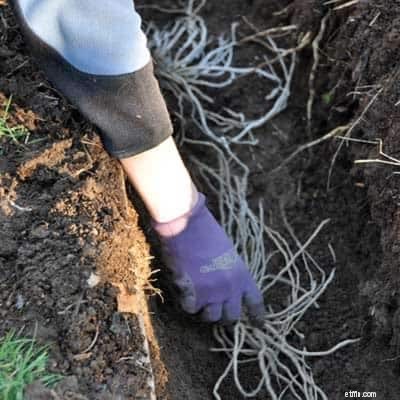
We also began our vegetable garden this month. Two weekends ago, I double-dug (double-digged?) a bed for the sweet peas. (When you double-dig, you’re essentially loosening two layers of soil, which helps the plants to grow.) We installed three pea trellises, and we’ve been planting one batch of peas each weekend. I’ll put in the last batch tomorrow. I may have to re-plant some of the earlier peas, though, because the blue jays have discovered they make a tasty snack.
You may recall that Kris is unhappy with the current performance of our four-year-old asparagus plants. Last weekend I double-dug a second area of the vegetable patch to act as a new asparagus bed. This spot should have better drainage. Here we planted 15 crowns of asparagus (Jersey knight and Mary Washington jumbo ) and several dozen red onion sets. We won’t be able to harvest the asparagus for a couple of years (the plants need time to develop), but we’ll use the onions in salsa this summer.
In the herb garden, Kris pruned the rosemary and the lavender. She’s quite pleased because her chives are peeking up. Very soon now, she will begin her vegetable seeds indoors. Many people have requested that Kris document the process, so I think we plan to have a mid-month update on how to start plants from seed. Stay tuned!
“Our expenditures in time and money are way up this year,” I told Kris after I finished compiling this month’s numbers. I was Very Concerned. But all Kris said was, “Yay!”
To her, more time and money spent on the garden now means bigger harvests in the future. I’m not convinced. Still, Kris assures me that we won’t have many other garden expenditures until May. (Which would bring our costs back in line with last year’s pace.)
Note that this month we harvested and used some of the herbs that Kris has been growing indoors all winter. In fact, we just had a mess of basil in our baked ziti last night!
In Oregon, the month of March is unpredictable. Every gardener is itching to get outside, but it’s wet and cold with a few precious — and fleeting — moments of sunshine. In those sunny moments, you can bet you’ll hear a lawnmower going!
I’ve spent a lot of semi-productive time in the flower beds this month, checking on the progress of my perennial flowers, most of which seem to have come through our extremely cold December just fine. While they’re just peeking up from winter, it’s a good time for me to assess which plants are getting invasive and where the bare patches are that will be filled by the plants I have started from seed indoors.
On March 1st, I started seeds for basil and eight types of flowers. Four weeks later, some of them are ready to be moved into 4″ pots. I also started some mesclun salad mix in our indoor herb container, and harvested the end of the winter’s basil and dill (leaving the oregano, which looks great).
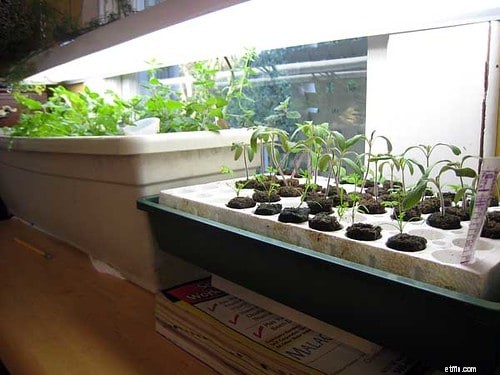
On March 15th, the day arrived that I look forward to all winter:tomato planting day! I plan to have twelve tomato plants this year (nine varieties in all). By the last day in March, each seedling was happily growing under fluorescent lights in the windowsill. Just a few days ago, I began seeds for two types of squash and some cosmos flowers.
The peas and onions we planted in February have sprouted. Mid-month, into the vegetable patch went seeds for three kinds of beets and more salad greens, and among the roses I planted an additional 25 strawberry plants. Neither the beets or the lettuce have sprouted (it’s been cold!) but I am confident that they’re on their way.
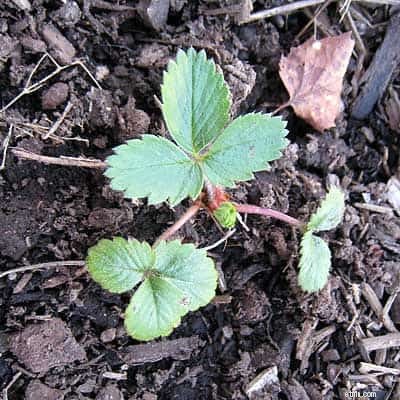
When J.D. writes about our gardening endeavors, he typically concentrates on the herbs, fruits, and vegetables. He loves to eat! But much of my time is devoted to the flower garden. The expansive flowerbeds on our property were filled with 125 rose bushes when we arrived. After giving many away, relocating others and accidentally killing a few, we’re down to about 60. In their place, I have gradually added perennials, bulbs and self-sowing annuals.
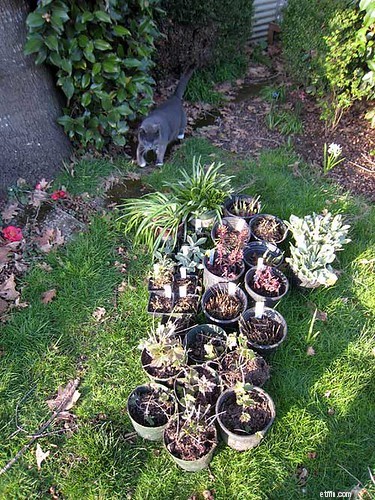 Now that many of these established plants have been growing for several years, they are ready for clump division or have provided volunteer offspring that can be moved elsewhere.
In April, my friend Rhonda is hosting a plant swap. Each participant will bring plants dug from her own garden, and take home others. A few guests are coming empty-handed because they are in new homes without gardens, but I am sure there will be plenty to share.
This month, I spent a couple of hours digging and dividing, and now have about 30 pots to swap. This is a fun way to frugally multiply your landscaping! Since most of the plants that people bring to swap are “vigorous growers”, you can bet that it will only be a few years before they’re ready to be swapped again with someone new.
The edibles garden took little time this month — about 4 hours — especially if you don’t count the many trips I took outside just to squat and peer at the soil where I had planted seeds.
Based on last year’s tests, we estimate that we spent just $1 in March to run two fluorescent shop lights. We anticipate an inexpensive April as well. J.D. had a minor freak-out when he saw our February expenditures, but looking back at last year’s totals, by now we’ve only spent $10 more, gotten $15-worth of herbs from the winter window box and planted three new fruit trees. That’s a bargain!
April was a slow month for our garden. We didn’t do much. Part of this is because we’ve become more efficient. But another part is because we did some of our chores earlier this year.
Kris has been antsy to get plants in the ground. I always tell her that May 1st is our target date, but she’d plant out on the first of April if she could. Last year she put her tomato starts out a few days early, and that was a mistake. They were pummeled by a freak hailstorm and never did produce much. This year, she decided to wait.
She did, however, do a little bit of work. She planted beets, radishes, and lettuce. She transplanted her tomatoes into bigger pots. And she produced a garden map that outlines where she intends to plant things.
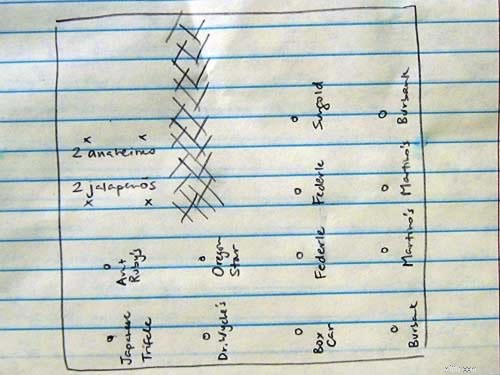
Kris has mapped out where she’ll plant tomatoes and chili peppers
My only garden work was a frustrating hour spent rototilling the compost and leaves and horse manure into the soil. It was frustrating because we have a large, willful rototiller that seems to have a mind of its own. Our actual garden isn’t very large, and we currently have created a sort of maze around the asparagus and onions. That makes it difficult to maneuver. I did manage to get the ground worked up, but it didn’t happen without cursing!
Speaking of cursing:Last year, our gooseberries were mauled by a sawfly infestation. This year, the sawfly larvae are back, and they’re not only devouring the gooseberries, but the currants as well. The gooseberries we can live without, but not the currants. Kris is researching organic pest controls.
We may not have much to share about our garden this month, but we do have some photos. The last few days have been sunny, so we’ve had a chance to photograph our garden in its early stages. Here, for example, is the (mostly) blank canvas:
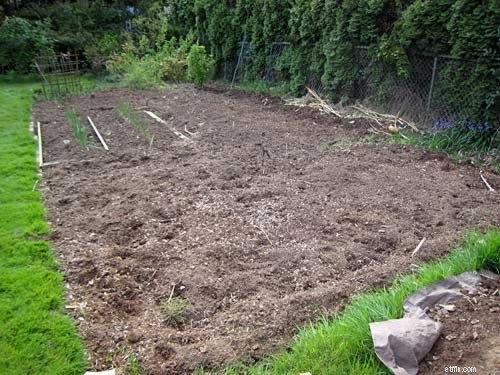
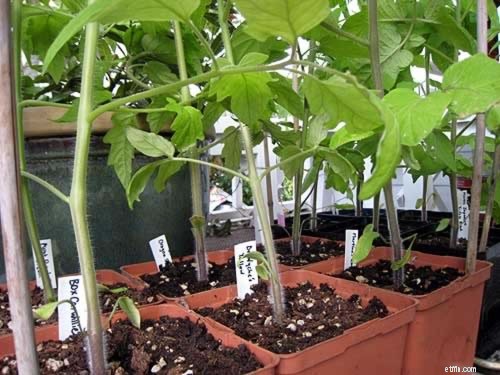
As a reminder, the area of our vegetable garden space is roughly 15 ft by 34 ft (4.57 m x 10.37 m), or 510 square feet (47.4 sq. m.). This actually isn’t very big, and we’ve considered enlarging it. As I mentioned before, Kris planted out her tomatoes yesterday, so this space is no longer empty. Before she planted them, however, Kris set her tomatoes outside to “harden off”. I know this photo doesn’t really show it, but these things are enormous after only six weeks of growth:
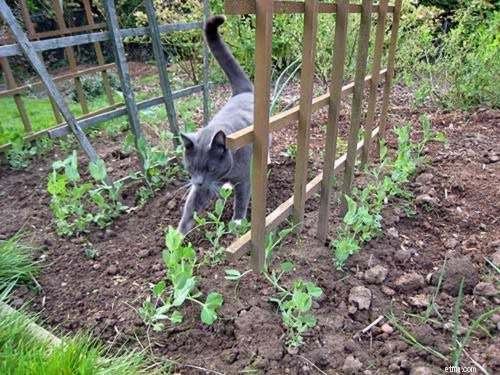
Meanwhile, we do have some crops up. We’ve recruited help to maintain them. Meatball has been tasked with patrolling the beets, radishes, and peas, and Simon has been given charge of the onions:
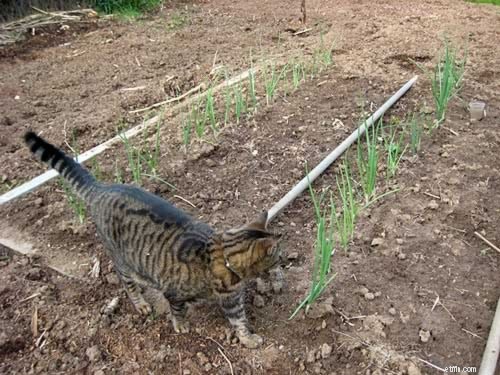
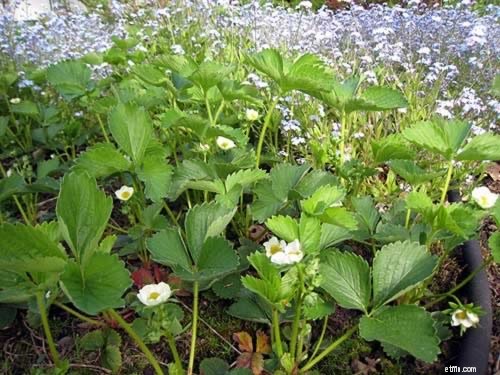
The peas and onions aren’t the only things growing. This is the time of year that berries begin to go berserk. They’re not producing fruit, of course, but they’re beginning to show promise. The blueberries are laden with blossoms (especially the Toro, which are our favorite). So too are the strawberries:
Our caneberries have begun their vigorous growth. No blossoms yet, but lots of new shoots:
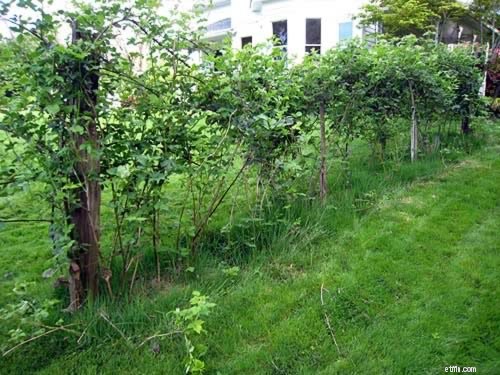
Though I don’t have photos, our fruit trees have also begun to bloom. We have two apples, three plums, a cherry, and a pear. We’ve set out pest control in a few of these, and that’s all we’ll really have to do until harvest.
Finally, here’s a salad that we made from herbs and lettuce greens that Kris grew indoors. This is a perfect example of how you can harvest home-grown food in a small amount of space. (You can’t harvest a lot of it, but you an harvest some.)
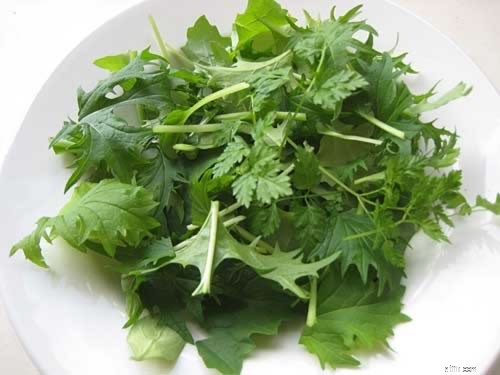
The edibles garden took little time this month — just 3 hours. We didn’t spend a dime. We harvested a single asparagus spear (which Kris consumed raw), but we won’t count that in our totals.
What a difference a year makes! Our fruits, berries, and vegetables had a slow start last year (and then were further slowed by a cold, cold June). This May was warm — very warm. Our food crops loved the weather, and they’ve shown explosive growth.
The sunny weather produced lots of growth. The peas and raspberries and blueberries and fruit trees all look amazing. We’re going to have huge crops. We have a couple of small snow peas on the vine, and the tomatoes are blossoming. But only three crops have yielded fruit through the end of May:
That puts our May harvest at $5.97, which isn’t much, but it is still $5.97 more than we harvested in May last year.
Though our garden is going well this year, we’ve experienced some minor annoyances:
These aren’t major problems, obviously — they’re just minor annoyances. We try to take care of our equipment, but there are a few failures every year. Partly because of this, May was an expensive month. (It was also expensive in 2008.) We spent $98.55 on garden supplies, including herbs and vegetable starts.
I spent zero hours in the garden this month. I did a few quick tasks, but no major work. Kris made up for that. She tells me she spent 15 hours on food-producing activities last month. I’m skeptical. That’s 40% more than our busiest month in 2008 (July). On the other hand, she did do a lot of work out there. (She tells me that just as some GRS readers warned, the horse manure we spread last fall has produced a fine carpet of weeds, which she hoes daily.)
It’s the beginning of summer, and that means our garden is lush and green and growing. It also means there’s nothing exciting to write about. We’ve begun to harvest a couple of things, but mostly our chores have become routine. We weed and fertilize while we wait for the crops to ripen.
One problem we’ve encountered this year is weeds. There are always some weeds to be pulled, but as many GRS readers warned, spreading horse manure on our vegetable garden caused more weeds to sprout . Kris is the weed-puller (and plant-fertilizer), so she puts the most hours into the garden. She spent four hours working on food crops this month, while I spent three, all of which were harvest-related.
As our harvests begin, I want to remind you of our methodology. For the purposes of this project, we’re using “best match” pricing. Based on GRS reader suggestions, we’re obtaining typical pricing from our local farmers market. In some cases, we use pricing from a local organic produce stand. In all cases, we’re trying to be fair, but this is more art than science.
Also, last year we established through repeated measurements that a pint of berries weighs roughly 300 grams. I’ll use this approximation frequently throughout the summer.
Those ground rules established, here’s our harvest for the month of June:
Our harvest this month was worth a total of $78.37. In June 2008, we harvested $50.83 worth of food. That’s a 54% increase in the value of our crops!
Despite the correct pruning we gave them this year, our raspberry harvest looks as though it’s going to be pitiful. The culprit? They’re overcome by the monstrous marionberry vine that has taken over the entire trellis. We may relocate the raspberry canes, so will evaluate the yard for a suitable spot and decide later this summer. However, there is a silver lining; we love marionberries (a type of blackberry-boysenberry cross).
And so the profit portion of our project has begun! July, August, September, and October will be even more productive as we begin to pick our caneberries, our tree fruit, and, especially, our tomatoes.
As always, we’ve been supplementing our own produce with food picked elsewhere. Last weekend, our friend Jolie joined us for a trip to the strawberry patch. Kris and I picked 24 pounds of berries (about two flats), for which we paid just over $20.
On Friday, our neighbor came over to let us know that her cherries were ready to harvest. We’ve decided not to preserve any cherries this year, but we picked about 10 pounds just for snacking.
Welcome to Oregon, where for the past week it’s been hot . How hot? Here’s the temperature graph from the National Weather Service for Monday, Tuesday, and Wednesday:
The heat hasn’t prevented us from working in the garden. We’ve been watering the thirsty plants, and we’ve begun harvesting their fruit. It’s hard to believe that just three months ago, this was a bare patch of earth. Now it’s grown so lush that it’s difficult to photograph:
But how have our harvests been? Let’s find out.
Remember how last year Kris and I couldn’t find a price for our currants or gooseberries? They’re just not available here in Oregon, so we used the same figures for them as we did for our other berries. But earlier this month we stopped at an Asian supermarket, and they had both gooseberries ($2.99 for 6oz.) and red currants ($3.49 for 6oz.).
So what?
Well, in July we harvested 8.362kg of red currants from our two bushes, which is 18.42 pounds. That’s a lot of currants. Look again at that price in the last paragraph. $3.49 for 6oz. translates to about $9.30 per pound. In other words, we harvested $171.43 worth of red currants this year .
Holy cats!
I have new advice for how to make a garden profitable:Plant red currants — and lots of them!
But what can you do with eighteen pounds of red currants? Kris made two batches of red currant jelly with the most beautiful ruby red color you’ve ever seen. She’s going to enter some in the county fair in mid-August. We also had two friends come glean the extras. Plus there were currants left over to freeze!
While the currants gave us a bumper crop, other plants were less productive. The gooseberries didn’t produce much. And for the second year, they fell victim to the gooseberry sawfly. Kris and I agree:Those things are out of here! I’m going to dig them up and we’ll replace them with more blueberries.
Speaking of blueberries, they weren’t very productive this year either. I’m not sure exactly what the problem is, but we’ve harvested less than half the blueberries we did last year. Our raspberries were pathetic for the second year running; they just can’t compete with the vigorous marionberry canes.
Still, harvest season is in full swing. Here’s the complete tally from our garden in July:
Our harvest totaled $243.10, but most of that was from the red currants. Without those to salvage our stats, we would have finished behind last July. That’s okay, though. The tomatoes are just about to come on, and we’re going to have a lot more of them than we did last year. The fruit trees will also give us bigger crops than last year since they’re a year more mature.
As we often do, we also picked fruit from friends this month. We picked cherries from the neighbor across the street, and on July 3rd we drove out to raid the cherries belonging to our friends Ron and Kara, coming home with thirty pounds of mixed Queen Annes, Bings and sour pie cherries. Yum! We also made use of some early apples for a juicing experiment. This “free” produce isn’t included in the numbers below.
After late July’s blistering heat, August has been relatively cool around Portland. Our fruits and vegetables have been producing excellent crops. Kris is constantly busy in the kitchen, canning and preserving food. We’re eating fresh salsa all the time. And hard as it is to believe, I’m almost sick of blackberries.
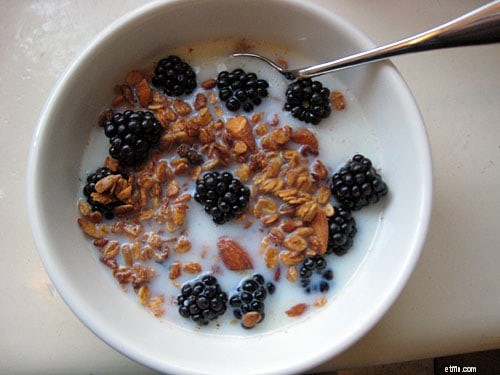
Fresh berries in a bowl of cereal ==a great breakfast! Photo by Kris.
This is actually the best year we’ve had for blackberries. They started producing at the end of July, and there’s been a non-stop flood ever since. Sometimes — in mid-winter — I think I want to plant more blackberries. But during the month of August, I’m reminded that this is a silly idea.
The blackberries aren’t the only prolific producers this year. Our young plum tree is going gangbusters. It yielded its first small crop last summer, but this year it’s really loaded. And Kris’s cucumbers are the most eager growers of all. She has more cucumbers than she knows what to do with and has been taking the excess to share with co-workers.
Also, our tomatoes are doing much better than last year. The cool June in 2008 stunted the crop. We only had 12.88 pounds of tomatoes in August. This year we picked 31.39 pounds of the fruit — and even then we felt this was a little low.
Not everything has produced well, though. July’s heat ended our blueberries early. In fact, we’re unhappy with the blueberry/gooseberry/currant patch, so we’re going to rip out most of the plants and replace them with new ones. Our current blueberry plants are transplants from the neighbors, and they’re 25 years old. They’re weak producers. Time to put in something that will produce fruit worth picking.
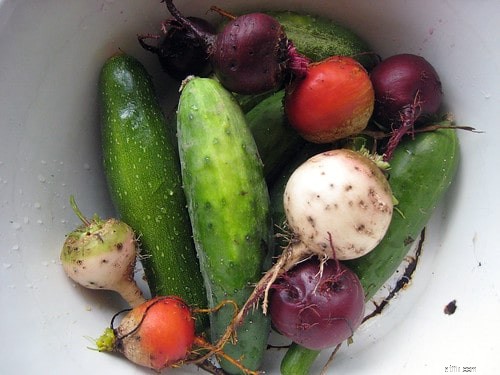
Summer harvests can be beautiful. Photo by Kris.
Still, harvest season is in full swing. Here’s the complete tally from our garden in August:
Our harvest this month totaled $186.33 worth of produce — and that’s without some freak crop blowing the lid off the values. (Last month, we discovered that our red currants are worth quite a bit, which distorted the totals for July.)
This year, for the first time ever, Kris entered some of her produce at the county fair. Her dilly beans took first prize (out of ten entrants). When I picked them up after the fair was over, the woman who returned them to me raved about the beans. “They were so good,” she said. “I had to copy down the recipe.”
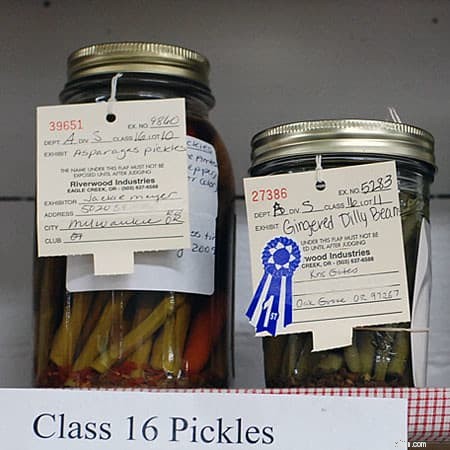
Kris’s prize-winning dilly beans. Photo by Amy Jo.
We continue to receive “free” produce from here-and-there. Friends and neighbors share their surplus, just as we share our surplus with them. Last weekend, for example, the old couple next door brought over a wheelbarrow load of pears. The seventy pounds of fruit they gave us kept Kris canning all day Saturday, and yielded 16 quarts of sliced pears in syrup, 7-1/2 quarts of pear sauce, and 5 quarts of dried pears.
Things are looking good! Better weather in 2009 combined with more effective efforts on our part has created a far more profitable garden project. And again, that’s even though we’re not particularly frugal gardeners.
After a long productive summer, our September in the garden was kind of anticlimactic. Sure, we continued to harvest our home-grown food, but neither of us was particularly “in” to the garden this month. It was a chore instead of an obsession. September can be that way sometimes.
Still, there’s always something happening with our home food production. This month:
Now we’re just waiting for the grapes to ripen (soon, very soon) and the harvest season is done. Kris and I are both disappointed that, for us, this has been the Summer of No Corn. We didn’t grow any ourselves, and we didn’t have another convenient source. When people did give us corn, it was terrible. Ah well — there’s always next year.
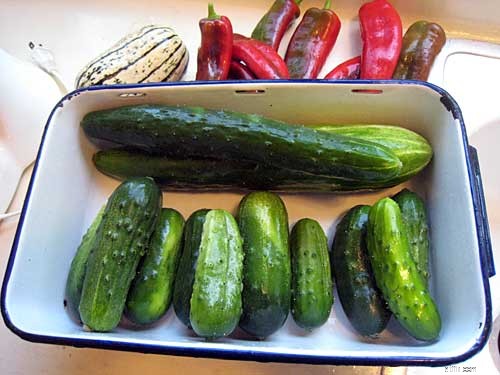
But what you really want to know is how much we “earned” from our garden in September, right? Here’s this month’s tally:
As always, we also enjoyed some of the harvest from our friends and neighbors. We obtained 28 pounds of plums from other folks, a bunch of onions from my cousin, and about 30 pounds of fresh-caught salmon and halibut from the millionaire next door when he returned from Alaska. (And Tina offered us as much corn as we wanted, but we weren’t able to pick it.)
I’m a little worried about October. Last year, we harvested over $150 in produce because the tomato season lingered. This year, though, tomatoes are essentially over. Kris and I don’t expect to harvest much more than we already have. Who knows, though…maybe we’ll be surprised. Still, our harvest total for the year is already greater than our total for all of 2008, so we’ve made improvements!
As those of you who follow me on Twitter already know, it’s been a l-o-n-g Saturday filled with all sorts of misadventures. Murphy’s Law has been in full effect this Halloween. I’d meant to post this month-end garden summary around noon, but now will have to do. In fact, there wouldn’t be a summary at all except that my wife sat down and wrote it for me . Here’s what Kris has to say about the month of October…
October arrived with the typical cold and damp, bringing Portland’s garden season to a close. During the fall and winter we’ll enjoy the hearty foods we’ve packed away from this year’s crops, until by early spring we’re ready to begin anew.We’ve been eating fresh fruit and vegetables from our garden patches since May’s first strawberries. Not bad!
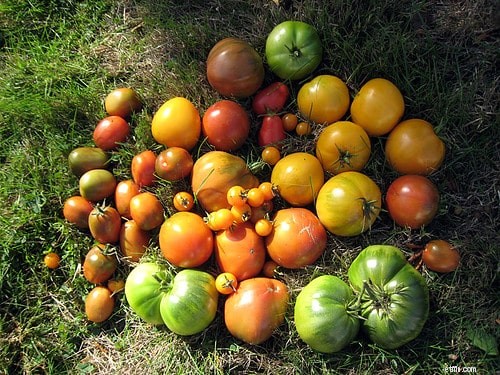
We harvested the last of the garden produce this month.Rain and wind don’t mix well with ripening tomatoes, so I picked 15 pounds of semi-ripened tomatoes to take inside. Stored in a cool place between layers of newspaper, some of these will turn out to be fairly delicious.The rest will rot.
The cucumber plants coughed up enough for another month’s worth of salads, and the beets were ready for roasting. (In fact, I’m roasting some in the oven even as I write this.) In addition, I tore out the jalapeno plants and dried the peppers in slices in the dehydrator.Some went to our neighbor who loves spicy foods; the rest will go into winter cornbread and soups.
Usually I collect the fallen English walnuts in our front yard, but the squirrels have been especially voracious this year!And my volunteer vine turned out to be a birdhouse gourd that gave me two mature gourds for fall decorating.
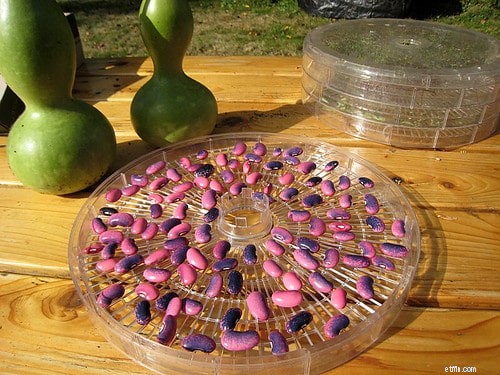
I spent time in the mud ripping out cucumber and squash vines, then the beans and tomato plants, and tidying up the apple trees. We also dug out the beleaguered gooseberry plants and three poorly-producing 25-year-old blueberries.We invested $84 in five new blueberry bushes of various types and sizes.(We’re trying to stagger the berry harvest so it lasts as long as possible.)As we rake leaves in our yard, we’ll spread them onto the garden bed to mulch the asparagus and keep down the weeds over the winter.
In the waning hours of sunshine, early October in our neighborhood smells of Concord grapes.We wait until the scent tells us they’re ready, then head over to the generous neighbor’s yard to pick all we can use. Our own young vines produced a good crop as well. This year, J.D. gathered about 30 gallons of mixed purple and green Concords.I made juice (22 quarts) and grape jelly.It’s a long day but so worth it every time we open a jar.We also made another batch of applesauce from twenty pounds of fruit brought back from an orchard by a friend and fellow canner.
This summer’s total for canned food:140 quarts of assorted pickles, apple/pear sauce, juices, jams &jellies, salsa and fruit.My pantry is full to bursting!I love being able to eat this local bounty during our winter, rather than buying produce that’s been shipped from far away.
In addition to the canned food, the freezer is stacked with berries and assorted sauces, and dried fruits and herbs are stored in a dark and dry place. All this “free food” keeps my grocery spending in check even when we’re not eating directly from the garden.
The fall is when I tally the herbs for the year.Our herb garden provides me with sprigs and snips all year.The annual herbs are finished (basil, stevia, cilantro) and others die back until spring (lemon balm, oregano, mint, lavender) but the perennials will keep going for our winter kitchen use (rosemary, chives, bay leaf, sage &thyme).Throughout the summer, I’ve dried lavender flowers, mint and lemon balm, stevia and raspberry leaves for making tea infusions. Altogether, I estimate that the herb garden has produced at least $50 of harvest.
Here’s the tally for October’s harvest:
Spring is around the corner. I think. After spending three weeks basking in sunny skies and temperatures of 20-30 degrees (yes, I’ve taught myself to think in centigrade!), it’s something of a shock to return to Oregon’s five degrees and rain. Still, I know warmer weather is just around the corner — and that means it’s time to garden.
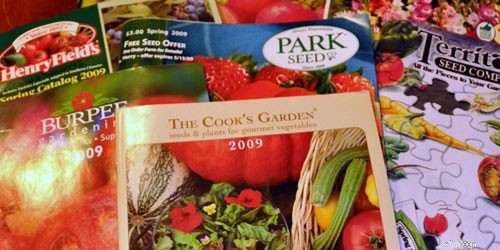
Kris has already started to think of the garden, of course. Her mind makes the leap just after Christmas, when the first of the seed catalogs starts to arrive.
In January, she went through her seed supply — her leftover seeds and seeds saved from last year’s crops — to determine what she needed to order. In the end, she chose:
She spent a total of $24.15 on seeds, ordering mostly from Territorial Seed Company, which sells seeds specifically targeted at “the maritime Pacific Northwest”. (If you can buy your seeds from a regional company, do so. You’ll get plants better suited for your growing conditions.)
Kris has a system for buying seeds. If it’s a new variety she’s trying, she buys the smallest package possible. If it’s a kind she knows she likes, she buys enough to plant for the next two to four years. She saves the extra seeds in the fridge (in an air-tight container).
We’ll plant more in the garden, of course. As usual, we’ll pick up tomatoes, basil, and peppers at the Master Gardener sale at the end of April. These plants will have a good head start, and will let us try a few new varieties.
Kris estimates the seed-buying process took about two hours.
While Kris was buying seeds, I spent some time getting the garden ready. With the help of the boy we hired for a weekend, I tore out some of the old plants, weeded some patches, and — gasp! — cut our blackberry canes to the ground. (This won’t kill them. It’s like pressing the reset switch. They were out of control, and this will give us a chance to guide their growth. But it does mean we won’t get many berries this year.) We spent maybe two hours total doing this. (Meaning, I spent two hours on this, and I paid Ian $20 to help.)
This weekend, Kris intends to plant the peas — if the weather cooperates. The ground is very wet, and there seems to be more rain on the way. (What is this? Oregon?). She’ll also start seeds indoors for her flower garden (nicotiana, zinnia, cosmos, marigolds, and so on). The flowers are mostly from seeds saved in previous years, though the flower-garden costs aren’t included in this project. (Flower gardening is one of Kris’ favorite hobbies.)
Next month, Kris will start seeds indoors for food crops:cucumbers, pumpkin, and zucchini. She times when she plants the seeds based on when she intends to plant them outside (which is May 1st), and counting backwards to get the weeks needed according to the seed-packet instructions.
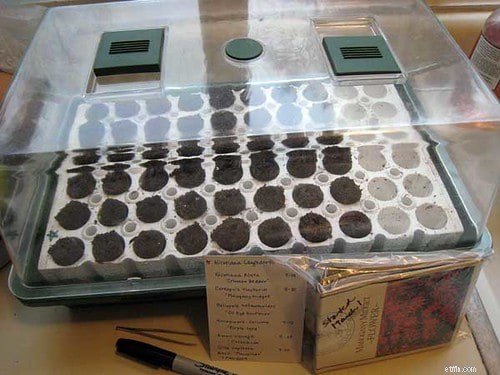
At the end of April, we’ll attend a “garden exchange”. This is the third year our friend Rhonda has organized a plant swap. Everyone brings their extra plants and seeds, sets them out for others to see, and then takes home what they want or need. In anticipation of this event, Kris will plant extra flowers and vegetables for trading. (She’ll also dig out some perennials to share.)
A garden exchange is a fantastic, frugal way to share plants, but now is the time to organize this if you live in a cool climate. Don’t wait until the last minute.
It’ll be a while before we have fresh berries, but we’re still able to enjoy the fruits of last year’s harvest. In fact, Kris has been using our supply of berries in yogurt smoothies. Here’s her recipe:
We don’t grow the bananas or oranges, of course, and we don’t harvest the honey. But we grow the berries, make the jelly, and, thanks to Jolie Guillebeau, we make our own yogurt. And in just a few months, we’ll have fresh berries to use in the smoothies.
With the cold weather and our trip to Africa, the 2011 garden project is off to a slow start. (It’ll pick up over the next few weeks, though.) We’ve spent a total of 4.0 hours and $44.15 on this year’s food-producing garden ($24.15 for seeds and $20 for hired labor).
It’s interesting to note that there’s really no “typical” year so far.
If you had ask me to guess before I started this project, I would have thought that each year would be much like the year before. Apparently, that’s not the case. I’m eager to see how this year’s costs and harvest unfold…
March is usually a time for Kris and me to get back to work in the garden. The weather warms, and we get to watch as our first sprouts poke through the soil. This year? Not so much. It was a cool, wet month.
The average temperature in March was about 46 degrees Fahrenheit — which is below normal for this time of year. In fact, Portland just had a record stretch between 60-degree days. The last such day came in early December. We usually get a couple of 60-degree days in February, but if the clouds hadn’t parted on the afternoon of March 31st, this year we wouldn’t have had a warm day until April .
Meanwhile, rainfall was nearly 75% above normal for the month. If that rain had all been concentrated over a few days, we might have done some work in the garden. But it wasn’t. It rained 28 days in March. Twenty of those days saw 1/10th of an inch of rain or more. It was so wet last month that the peas we planted after returning from Africa simply rotted in the ground. And now it’s too late to plant replacements. So, we probably won’t have peas this year. (Which is sad, because I love peas!)

As you’ve probably deduced, between the cool weather and the heavy rainfall, Kris and I did nothing on our garden in March. In fact, we did nothing in the yard. The lawn did get mowed — but not by us. It’s been far too wet for my mower. But we were making dinner last Monday night, when Kris asked, “Is somebody mowing the yard?”
Sure enough. There was the Real Millionaire Next Door on his riding lawnmower. I went outside to chat with him. He just got back from his winter in New Zealand (where it was summer, of course), and he’ll be here a month before heading north to Alaska. He’s like a migrating goose. But he’s a goose who mows our lawn and brings us salmon, so it’s always good to see him.
This garden update is pretty lame, I know. Trust me:There’ll be more to report for April. And May’s installment will be packed!
How’s the weather where you are? How does your garden grow?
After a long vacation in February and a wet, dreary March, Kris and I finally were able to do a little work on our vegetable garden in April. Slags. The weather remained chilly and damp throughout the month, so we didn’t get as much yardwork done as we’d like. (The average high temperature for April 2011 was 4.5 degrees below normal. The average low was 2.1 degrees below normal. Rainfall was 5.04 inches, almost twice the average for the month.)
Though we couldn’t really plant anything until the last day of the month, Kris has been itching to get in the garden, so she’s been doing a lot of maintenance and clean-up. She and I put a total of twelve hours into our food-producing gardens in April (though eleven of those hours were hers). Most of these hours were spent pulling weeds, digging out old overgrown herbs, and getting the gardens ready for planting. (We opted against using the rototiller this year, so it took longer to prepare the plots.)
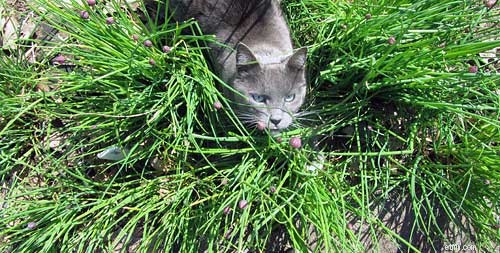
A big, furry weed in the middle of the chives.
In mid-April, we attended the neighborhood plant swap, where we were able to pass along plants we no longer need (or want) while picking up others that might be more useful. Kris brought home parsley, tomatoes, and lovage (a celery-tasting herb). She also scored lots of perennial flowers. (But we don’t track flowers in our garden project, thank goodness. That’s purely for fun.)
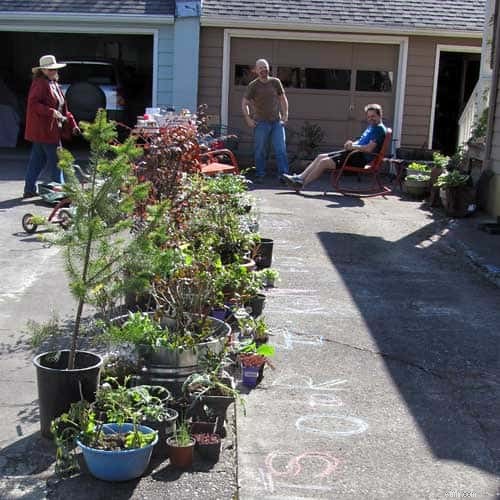
At the plant swap, Mike and J.D. enjoy some fleeting moments of sunshine.
At the plant swap, our friend Craig gave us three kinds of lettuce seeds and some plant-marker stakes made out of old mini blinds. (What an awesome idea!) Though we never have success with lettuce, Kris planted some indoors, and we’re giving it a go. She also has some basil started in a window box.
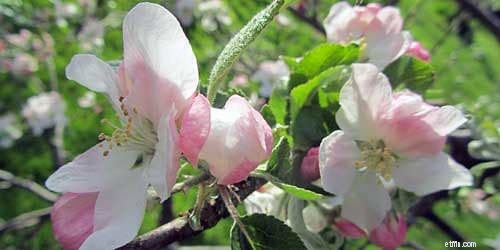
Meanwhile, most of our fruits and berries have begun to blossom, and our early crops are finally starting to show some life. The apple trees, for instance, are in full bloom, as my allergies can attest:
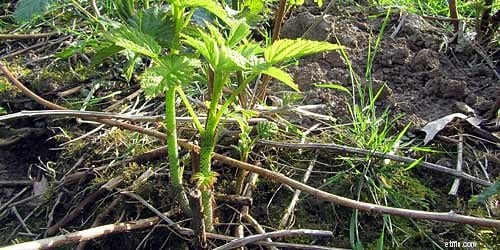
In January, we cut back our blackberries and raspberries hard . (“You’re not going to get any fruit on those this year, you know,” my real millionaire next door told me. “I know,” I told him. “It’s a price I’m willing to pay.”) Now, though, the caneberries are sending up lots of new growth.
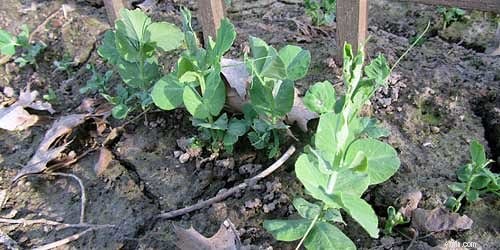
The grapes and blueberries currants are blooming, too. The peas are up, though they’re behind, and we’ve harvested a few spears of asparagus.
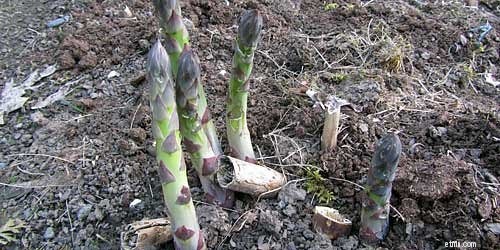
The peppers are in a container this year so that they can have warmer soil than the rest of the garden will get. We’re hoping this will make them more productive.
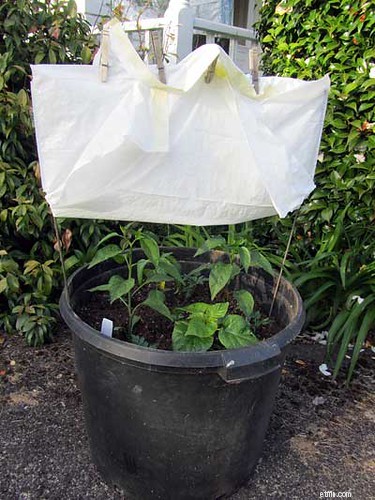
Kris’ frugal greenhouse:A garbage bag over the pepper pot
The tomatoes are currently in Kris’ mini greenhouse. They’ll stay there until the garden soil warms — our night-time temperatures are still in the low forties, about five degrees below normal — or until they get too big, whichever comes first.
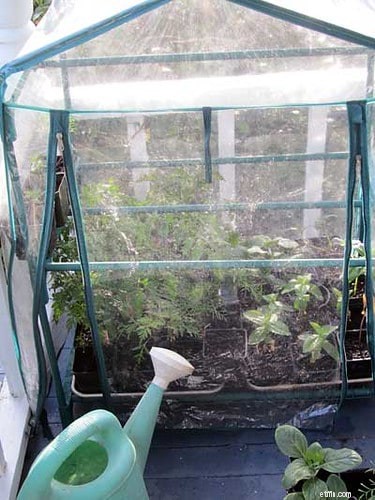
In short, we’re being patient. When the weather turns warm, we’ll be ready to plant things out. If we’re lucky, by the end of June, we’ll be writing about sunny days and sweet, delicious berries.
At the Oregon Master Gardeners plant sale, Kris spent $28.25 on plants for the vegetable garden. She bought:
Kris also bought some herbs. “But they’re decorative herbs,” she tells me. “They’re for the flower garden, not for the herb bed.”
I also spent $15.98 on a bag each of potting soil and compost, bringing our total expenses to $43.23.
All we harvested in April was about 263 grams of asparagus. Asparagus goes for $2.99 a pound at the local natural-food store, which means we’ve reaped about $1.73 in “revenue” from our garden so far this year. We won’t really start getting our money’s worth until June, when the strawberries begin to ripen. (I can hardly wait!)
In my mind, Oregon has mild springs:plenty of rain, sure, but also lots of sunshine and hints of the summer to come. Since we started the garden project, though, that just hasn’t been the case. Our springs have mostly been cool and moist — just like our winters.
May was again — surprise! — cool and moist. There were some sunny days, and our rainfall was around average, but the temperature was much cooler than normal. (Well, long-term normal, not recent normal.) Still, our garden isn’t as stunted as it has been in years past.
Despite the weather, our garden is thriving. As you’ll recall, Kris bought lots of “starts” at the garden show on the last day of April. She set out the tomatoes to harden off (allowing them to become acclimated to the great outdoors), and eventually moved them to the garden. From seed, she planted green beans, cilantro, cucumbers, zucchini, and pumpkins. She also planted nasturtiums — edible flowers — from seed. And sunflowers (though we don’t plan to eat those!)
Indoors, we’ve been growing lettuce, which is rare for us. We’ve tried lettuce (and carrots) before, but for some reason, we never have success. But our friend Craig, who is a fantastic gardener, gave us some lettuce seeds saved from last year’s crop. We planted them indoors and now have quite a crop.
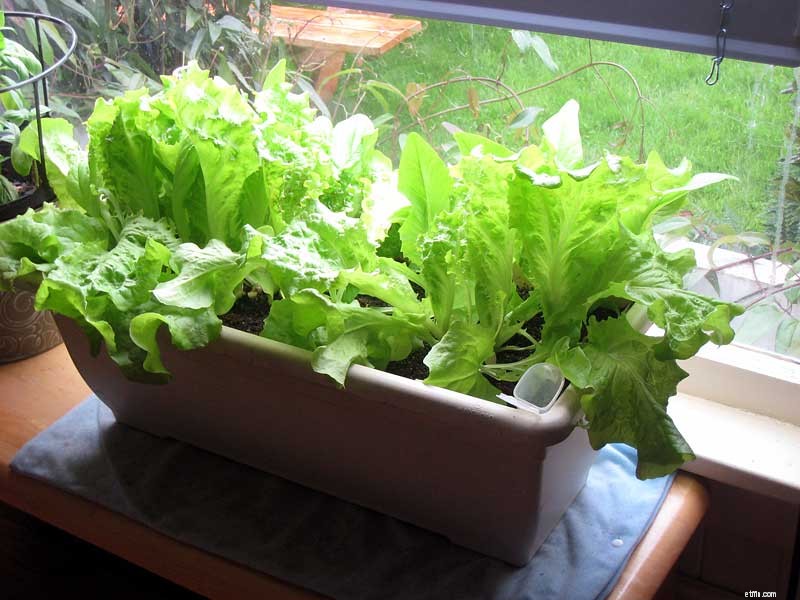
For the first time, we’ve grown lettuce that actually tastes okay. It’s not great, but at least it’s not bitter. Meanwhile, some of the cucumbers are still under cloches (made from two-liter soda bottles) because it’s been too cold.
Kris has been hoeing her garden and performing routine maintenance. I haven’t had time to tend to my berries (the blueberries are overrun with weeds!), though I did find time to trim the tall grass in the caneberries and grapes. And last weekend, Kris and I spent half an hour working together to tie up the blackberry canes.
While working on the berry canes last week, we disturbed a nest of baby spiders. “Holy cats!” sa jag. “Look at those guys. There must be a hundred of baby spiders.”
“They’re not really babies,” Kris said. “They’re more like teenagers.”
“I wonder what they eat,” I said. And then I had a thought. I ran inside to grab my camera so that I could shoot the following short video.
I went outside this morning to look at the spiders again, but they were gone — every single one of them. I don’t know enough about spider life to know if they were eaten, washed away by rain, or simply grew up and moved off of their mother’s fencepost.
Our costs in May were relatively low when compared to past years. Kris spent about six hours working on the food crops this month. “I’d love to spend more ,” she tells me, “if the weather would cooperate.” It looks like she’ll get her wish. The forecast for this weekend is sun, sun, sun — and the long-range forecast looks promising, too. I spent about an hour in the garden, giving us a total of seven hours worked this month.
Our only monetary cost was $10 that Kris spent on a large rhubarb plant, which she’s installed in a corner of the garden. (I’ll never know why, though!)
During the month of May, we harvested three things:
June’s harvest will be our first of any size for the year, as we begin to pick the ripening berries. And, of course, July and August will bring us a bounty of fruits, vegetables, berries and herbs!
We’ve spent a lot less on the garden this year than in past years. That’s because we haven’t spent anything on infrastructure. In 2008 and 2009, we had some major expenses for hoses and tomato cages and so on. We’ve had none of those costs this year. In theory, our infrastructure costs should be minimal now that we own most of the things we need to grow our garden.
Summer is finally here in our corner of the Pacific Northwest:The birds are chirping, the insects are humming and the garden is producing.
June started cold and wet but has gradually warmed enough to make Kris think this year’s garden is going to be successful. And she needs a successful summer after two straight years of poor tomato harvests — our pantry needs restocking! But those tomato crops are a long way off. At the moment, we’re enjoying our strawberries, peas (both snow and snap), and the lettuce from the window box we keep inside under a fluorescent shop light.
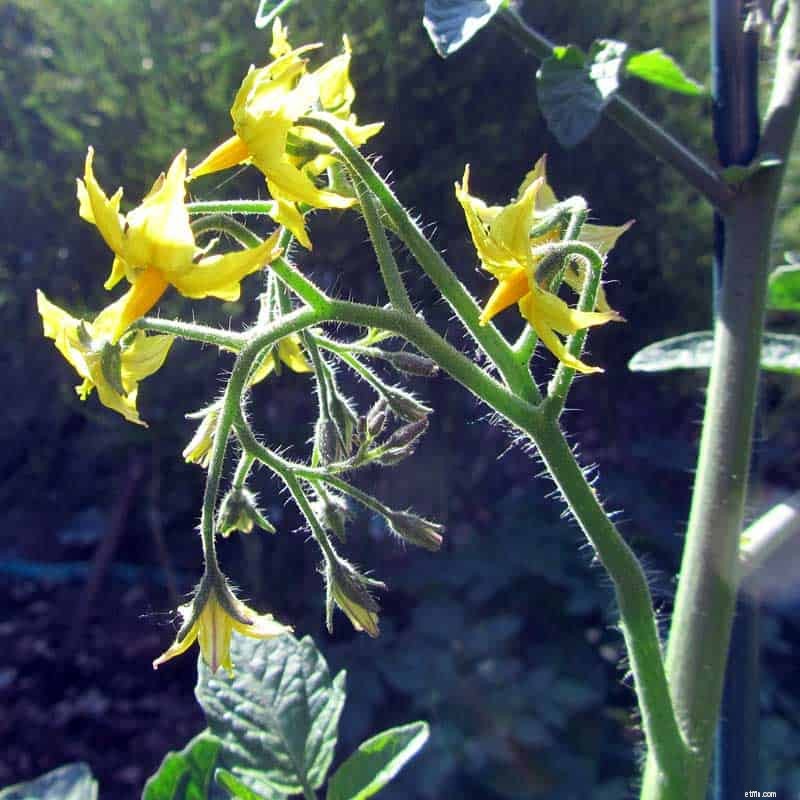
The tomatoes have burst into blossom, promising heavy harvests in late summer
The strawberries have been a morning staple this month (mixed into yogurt with homemade granola), and the peas are delicious straight from the vines or cut for a crispy addition to our salads. But as much as we like these early crops, the best is yet to come. The zucchini are almost big enough to harvest — maybe this weekend — and the currants are ripening to a gorgeous ruby red. The promises inherent in blossoming crops are making our mouths water:cucumbers, tomatoes, potatoes, blackberries, raspberries and elderberries, as well as peppers and pumpkins are all blooming like mad. (Do your job, bumble bees!)
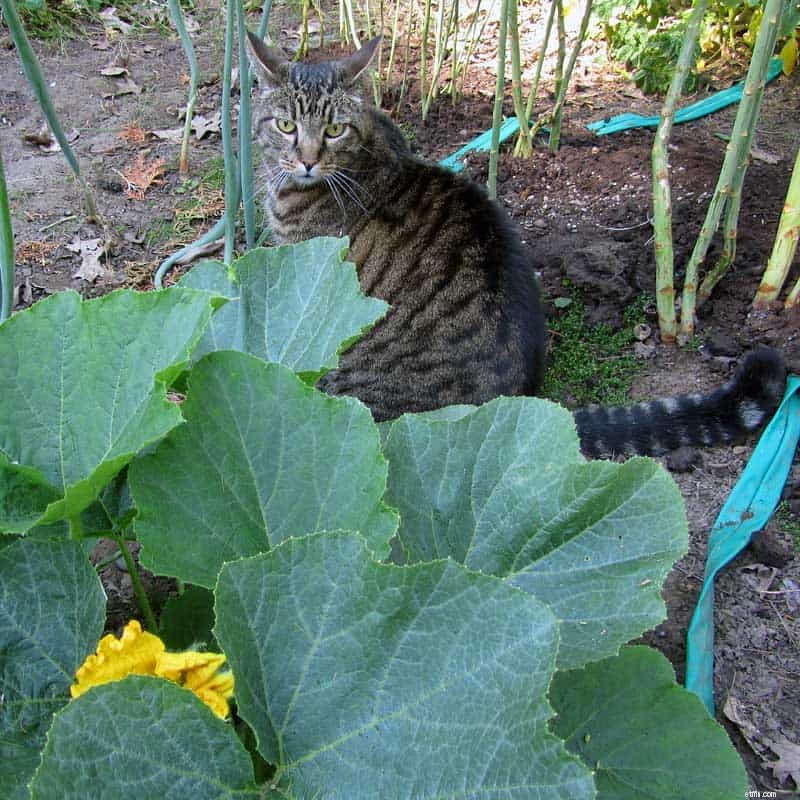
Simon stands guard by the pumpkin plant
From the herb garden, we’re harvesting basil and oregano. The oregano gets dried in the sun, and the basil is added fresh to pasta and pizza. Meanwhile, the apple, pear, and plum trees show potential for sizable crops — if the weather cooperates.
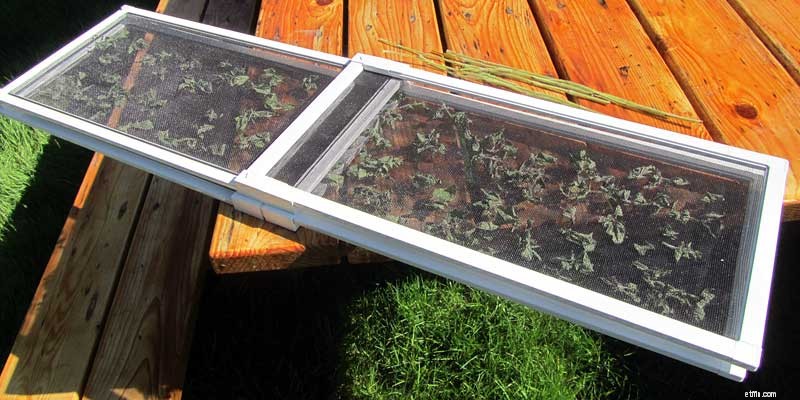
Drying oregano in the sun (between two window screens)
You may remember that we cut the berry canes back hard this year. Well, you’d never know it to look at them! They’re out of control! We’re expecting a small berry crop this year, but I need to get out there and tie up the canes before they take over the neighborhood. And we spent some time this month weeding our patch of young blueberry bushes and adding bark mulch. The mulch was our only garden-related expense for June ($36), but I think we’ll need to actually add another layer in July.
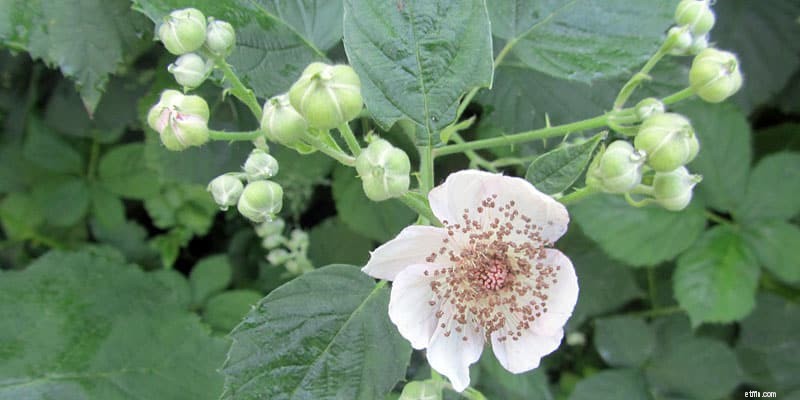
Despite being cut back hard, the blackberries are eager to produce.
Based in part on GRS reader feedback, we’re looking for some help with the yard and shrub maintenance since I’ll be traveling more. That will leave Kris able to focus her energies on the food and flowers as the summer continues. Altogether, she estimates we had about eight hours of garden-related labor this month.
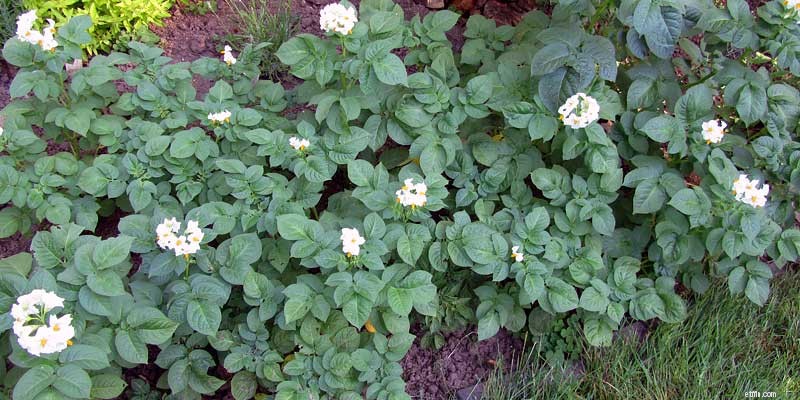
Our potato patch is enthusiastic this year
Our harvest for June included:
That’s a total of $16.06 worth of food harvested from our garden in June, but it’s barely getting started. The next few months should see a bounty of tasty, low-cost food. Yum!
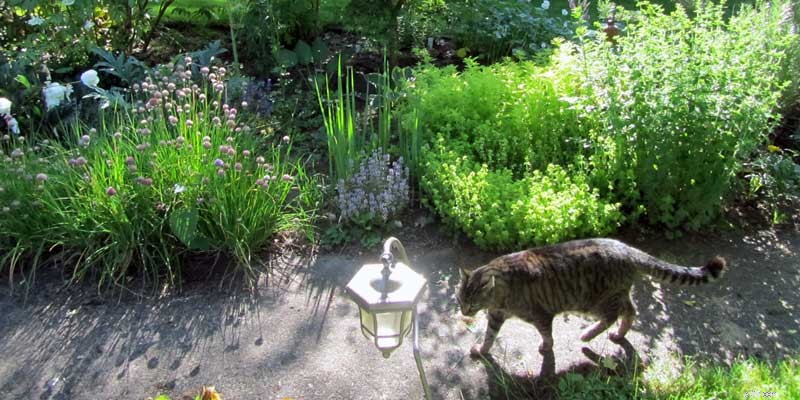
Simon patrols the herb garden to keep it free of squirrels
We had a strange July in our garden. First, the cool weather lingered longer than it ought to have. It wasn’t cold and wet, but the days were cool. Then we were gone for much of the month:Alberta, Colorado, Washington. Finally, our harvest was much smaller than in previous summers.
Part of this was because gave most of our currants to a friend, and our new blueberry plants (we replaced the old ones last year) produced fruit, but it went unharvested. (Translation:I wasn’t around/didn’t remember to pick the fruit, so we got none. This is a dumb way to garden.)
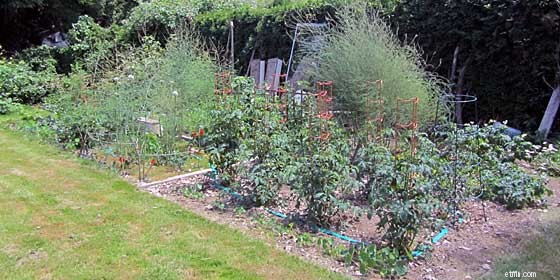
The low production, the donated fruit, and the wasted berries meant our numbers for the month were pretty pitiful. Our harvest for July included:
That’s a total “profit” of just $49.90, which is way behind the previous two years we’ve tracked the numbers. (This total doesn’t include the cherries we picked from neighbors and friends. That 13 pounds of fruit was worth roughly $32.)
We also had some minor expenses in July:
De goda nyheterna? August has been awesome so far. We’ve harvested a lot of beans, peas, cucumbers, and more. If the sun continues to shine, we’ll have a great tomato harvest. And the fruit treas are loaded! In three weeks, we hope to be sharing some big numbers with you.
This section was written completely by Kris.
I don’t know about your garden, but mine produces way more zucchini than I can ever eat. And although my basil is thriving, it’s put to shame by the zucchini. How happy was I to find a frugal pesto recipe in our local paper that uses plentiful zucchini as an extender in a Zucchini-Basil Pesto? It replaces expensive pine nuts with more affordable almonds, but don’t skimp on a good quality cheese—it really kicks up the flavor of this mild summer pesto.
Zucchini-Basil Pesto
(makes two cups)
To make the pesto:Melt butter in a medium sauté pan over medium-low heat. Add the almonds and shallot and cook until the shallot is softened but not browned, about 5 minutes. Add the garlic and sauté until fragrant, 45 seconds. Transfer the almonds, shallots and garlic to a blender and add the zucchini, basil, lemon juice, and cheese. Pulse until finely chopped. With the blender running, slowly add the 1/4 cup olive oil, stopping to stir the ingredients occasionally. Blend until smooth and season with salt and pepper.
I’ve adapted the recipe slightly to my taste and I use the lesser amount of garlic because I can find it overpowering. Feel free to make changes of your own and play around with it! This pesto would be good with pasta, grilled chicken, or as a dip or sandwich spread. This recipe makes about two cups — a pesto recipe using only basil would need about four cups of basil leaves instead of the one cup required here — and freezes well in small portions.
August finally felt like summer here in Portland. The entire month was sunny and warm, and there was very little rain. The garden rewarded us with productivity. Our harvest in August wasn’t huge, but we expect to pick a lot of fruits and vegetables in September.
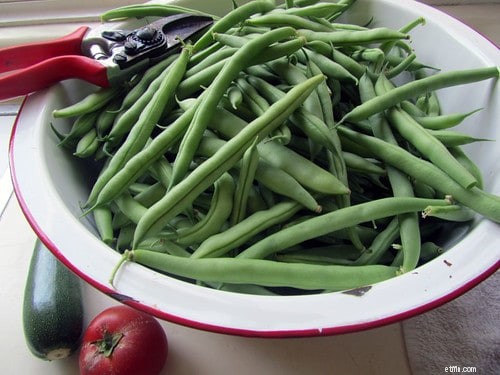
A harvest of beans
Still, we did begin to harvest many favorites, including nearly four kilograms (or nine pounds) of green beans! Our harvest for August included:
That’s a total of $89.45 worth of food harvested from our yard, and that doesn’t include the stuff we gave to others or that we harvested from elsewhere.
For instance, Kris and her friends picked apples at the house next door. We ended up with about 50 pounds of fruit, enough to can three gallons of juice and four pints of apple butter. Plus, Kris picked enough roadside blackberries to make two batches of jam. Yum!
Speaking of canning, Kris has been hard at work storing up the food from our yard (and from the local produce stand). She’s canned zucchini bread-and-butter pickles, dill pickles, ginger pickled beans, and a variety of jams. She entered some of last year’s goods in the county fair, and came away with prizes for her plum jam, bread-and-butter pickles, and pickled carrots. Plus, her sour cherry jam won a special award. (It’s just that good!)
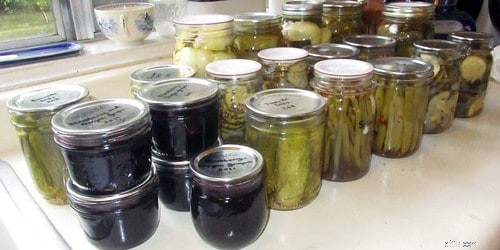
The products of a single canning session
We’re looking forward to a big harvest in September. The forecast is for hot, clear days, which should keep our garden producing. Our fruit trees are laden with apples, plums, and pears, and there are still blackberries to be picked. Plus, by the end of the month (or perhaps early in October), we’ll start to harvest grapes.
It’s a wonderful time of year to be a gardener.
This month, the cats weeds got out of control. As you’ll recall, we used to have four cats weeds but one died last February. We were doing fine with three, but when my mother had to move out of her home, we adopted her two cats weeds, giving us five. That’s a lot of weeds.
To make things more interesting, if you follow my personal blog, you know that we’re dealing with a new weed over the past ten days. A rabbit appeared in our yard one morning and adopted us (and our cats) as his own.
Two new weeds in our garden:Silver and Blackberry
Nobody in the neighborhood claims this rabbit weed, nor have our attempts to find his owners on-line come to fruition, so Blackberry (as we call him) is living on our property for now. He’s a cute little sucker, as this video demonstrates:
That’s enough weeds for now, though. We don’t have room for any others!
We had no expenses during August, and we worked very little in the garden. Our only time was spent harvesting.
Our late summer this year meant that our crops were delayed, but when the sunshine came, it came on strong! I was very busy in the kitchen in September, but not so busy in the garden itself.
An almond-pear tart
My records show that since the beginning of the month, I’ve preserved 126 pints of food for pantry and freezer, bringing my year-to-date total to over 263 pints (131 quarts). Not included in those numbers are the dried pears and plums I’ve been able to make from this year’s bumper plum crop from our tree and some of the 50 pounds of Bartletts shared by our neighbor, Roberta. And the fresh fruits and vegetables have meant I’ve purchased only lemons, limes, and onions at the store over the last month; of course, we all know J.D. has purchased pineapple, blueberries, and watermelon!
My pantry is now stocked with jars of applesauce, spiced pear sauce, and apple juice, apple butter, pear butter, pear-vanilla preserves, and plum-anise jam. The freezer has nine quarts of herbed tomato and onion pasta sauce and four pints of oven-roasted tomatoes with olive oil and sea salt. Added to the many pickled items and jams from earlier in the summer, we’re in good shape for the cold and gloomy Oregon winter months ahead! I’ve also made a good number of jams to give to friends for this year’s holiday gifts.
Italian prune plums from our tree
On one of our last sunny September days, I tore out the bean bushes and cucumber vines. They probably would have produced a bit more (the beans were still flowering), but I was in a mood to clean. Out came the smaller of the two zucchini plants, the dried pea vines, and the gourd vine once I had harvested this year’s gourd crop. Other than that work, the only labor for the month was the time spent harvesting — about 5 hours total.
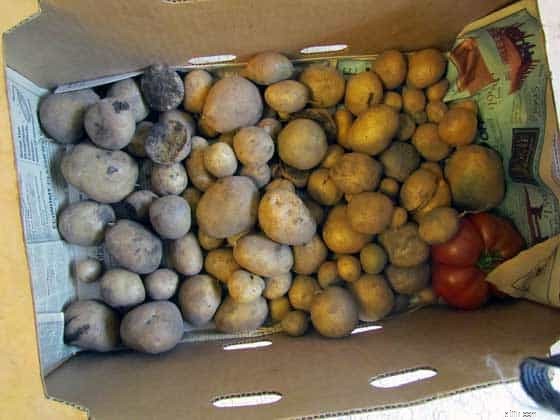
Potatoes from our garden
I’ve only collected about half the potatoes and will dig the rest in October. There are still tomatoes on the vines, but our recent rains may make them split and rot before they ripen. And time will tell about the Concord grape crop as well. I’d love to make some Concord grape juice and jelly — we’re out of both — but without J.D.’s help to harvest it, it will be quite a project. And there are still a number of jalapenos and habaneros turning bright colors on my plants—waiting to be picked and turned in to something much too spicy for me to eat myself!
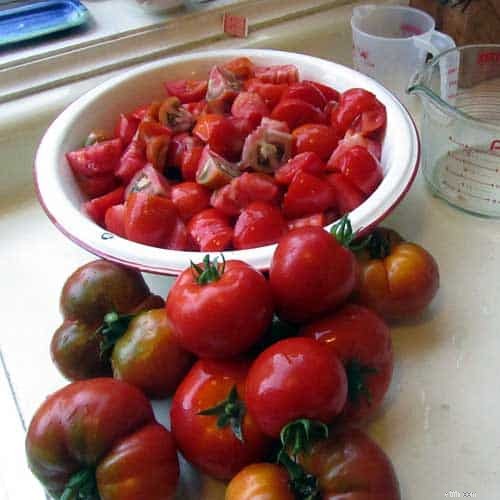
Tomato sauce, step one
After spending so many hours over a hot canning pot in September, I’m ready for the gardening season to end and the enjoying season to begin. Here’s our total harvest for the month:
That’s a grand total of $332.68 worth of produce in September! That’s a record harvest for any single month, and doesn’t include the 20 pounds of apples and 50 pounds of pears we picked up from friends. Maybe that’ll help make up for the slow year we’ve had so far. Let’s look at the annual totals.
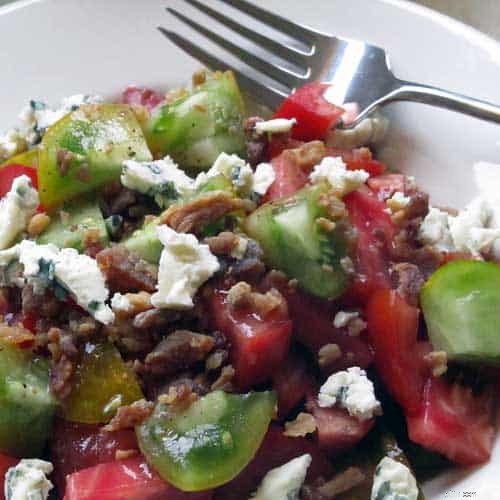
Lunch – a bacon-tomato salad
Our gardening season is complete for 2011. After an initial burst of cold and rain, our October weather was surprisingly pleasant. The garden plot has been cleared and is ready for us to rake leaves over it for the winter. The birds are enjoying the dried sunflower heads, and I’m waiting for a hard frost to cut back the asparagus ferns.
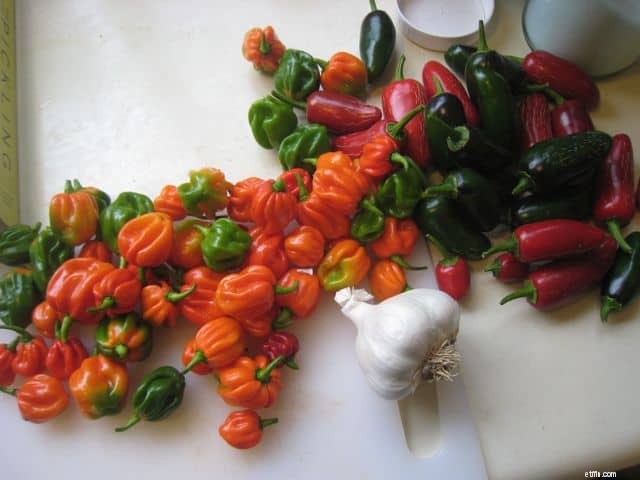
Habaneros and jalapenos—made a garlic chili relish for the people who like things HOT!
October means grapes around here, as well as the end of the apples and tomatoes. I made final harvests of our chili peppers and potatoes, and I’ve been carefully meting out my precious remaining plums and last batch of fresh salsa from the fridge. It will be many long months before we have any fresh produce from our own yard.
Final tally for food put-up to date:333.5 pints! That’s a lot of jars, and the pantry under the stairs is stacked high — more boxes are stored in the basement. That also includes the preserves that will be part of this year’s holiday gifts to our friends — we love our tradition of exchanging homemade treasures. I look forward each year to planning what I will make to share. As my friends are increasingly good at humoring me by returning my jars, and the fruits/vegetables are generally free, the cost of these gifts “boil down” to sugar and pectin! (Ha — that’s a canning pun!)
The pantry under the stairs
Oregon’s many wineries are worried about a poor harvest this year, but our grapes had their best year ever. In addition to harvesting from our own vines, I was able to pick about 30 pounds of Concord grapes from our neighbor (the millionaire next door) and made J.D.’s favorite juice and jelly to welcome him home.
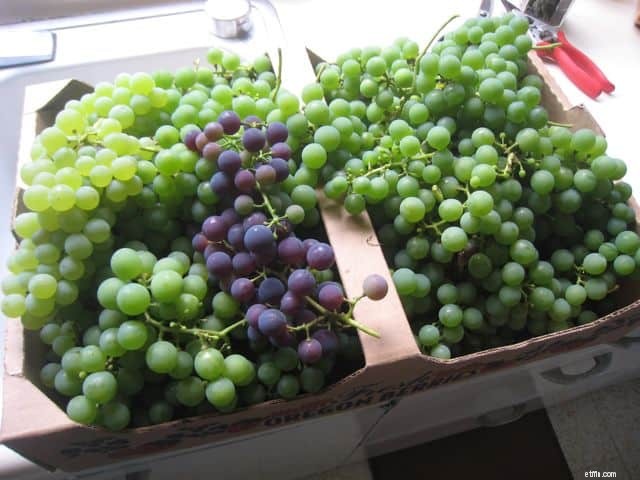
One part of the grape harvest—that’s about 10 pounds
Garden clean-up and harvesting totaled about six hours of labor for the month. Here are the numbers:
That’s a total harvest worth $161.66 in October with no out-of-pocket expenses.
Some of our crops this year were small (currants, blackberries), bringing our annual harvest value down. But despite that, this year’s overall profit is higher than for the other years we’ve tracked our progress. Varför? First of all, our costs were very low this year — we’ve got the main garden infrastructure established and didn’t need to purchase many items. In addition, I was very selective in my choice of seeds and plant starts this spring. And perhaps even more importantly, our maturing plants are producing substantial crops of asparagus, apples, plums, and grapes.
I look forward to next year’s crops from these perennial plants, as J.D. and I have been discussing taking a year off from the vegetable garden of annuals in 2012. I’ll turn my attention to the somewhat neglected flower beds instead and we’ll enjoy eating the pantry down. I think I may have enough jam to last us until 2018!
Here are this year’s totals through the end of October.
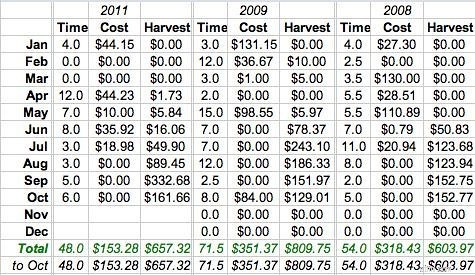
Share your progress! I’d love to hear about other people’s gardens. Especially if this is your first time growing your own food, please chime in with what you’re doing and what you’re learning.
This garden project is not a formal experiment. Kris and I are long-time hobby gardeners, and we have set ways that we do things. This year, we’re trying to incorporate some new ideas from GRS readers, but most of the time we’ll do things the way we have for more than 15 years.
We’re not trying to be 100% organic (though we are mostly organic through our normal practices). Nor are we trying to be 100% frugal. Instead, we’re trying to see just what our garden costs and produces based on our normal habits. We hope the results of this experiment will help us find new ways to economize and to improve our crops.
Hur man tjänar pengar på Amazon 2021 (även om du inte har en produkt)
Hur du motiverar dina barn att spara och investera:Regeln om 72
24 Warren Buffett-aktier som tappat 20 % eller mer sedan början av 2020
Hur man kontrollerar min matstämpelstatus i New Jersey
Genomför förändring av hur den amerikanska federala regeringen arbetar med Ethereum-baserade projekt
Definition av blandade investeringsfonder
Handelsstrategier i nästa globala ekonomiska nedgång
Vad är ett förkvalificerat brev?